

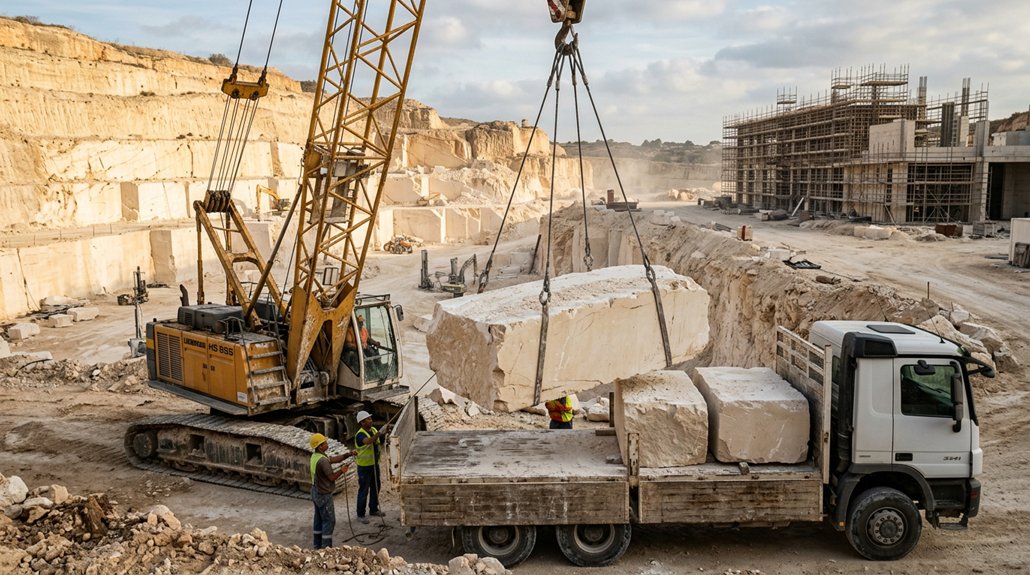
A block of stone carries the quarry’s mark long before it becomes part of your project. You’ll see how builders choose suitable stone, extract and shape it, then inspect and prepare each piece for installation. Careful protection and transport help prevent damage, but the final result depends on decisions made at every stage. One overlooked detail can compromise the fit, finish, or durability of the entire structure.
How Do Builders Choose Stone for a Project?
Builders choose stone by matching its strength, durability, and appearance to the project’s structural demands and setting. You should assess compressive strength, porosity, water absorption, and resistance to freeze-thaw cycles before specifying a material.
For load-bearing work, select stone that meets engineering requirements. For cladding or paving, prioritize weather resistance, slip performance, and finish.
Consider color, texture, and how the stone will complement nearby materials. Local availability can reduce transport costs and environmental impact, while reclaimed stone may suit projects seeking lower resource use.
Check maintenance needs, installation constraints, and lifecycle costs, not just the purchase price. Historical significance may guide your choice when a project must preserve regional character or match existing masonry.
Confirm test data, supplier documentation, and compatibility with mortar before approval.
How Is Building Stone Cut From the Quarry?
Once a quarry team identifies sound, accessible rock, workers remove the overburden and mark extraction lines to limit waste. During quarry extraction, you’ll see crews select a method suited to the stone’s hardness, bedding, and intended block size.
They may drill a pattern of holes, then use controlled blasting to separate large sections. Where vibration could cause fractures, operators often use diamond wire saws or channeling machines for precise cuts. Hydraulic splitters can widen drilled holes and release blocks with minimal shock.
Stone quarrying also requires careful sequencing: crews cut vertical faces first, then make horizontal cuts to free each block from the bedrock. They monitor fractures and adjust cut lines to protect usable material.
Finally, lifting equipment moves detached blocks to a safe staging area for transport.
How Are Stone Blocks Shaped and Finished?
Once quarrying yields a rough block, you cut it to the required dimensions using saws or other stone-cutting tools.
You then finish the surface by honing, polishing, or texturing it to meet the project’s performance and appearance requirements.
Cutting Stone Blocks
After quarrying, stone blocks are cut to precise dimensions and finished for their intended use. During stone quarrying, crews first inspect each block for cracks, grain direction, and usable dimensions.
You can then select a cutting method suited to the stone’s hardness, size, and project tolerances. Diamond-wire saws handle large blocks efficiently, while gang saws cut slabs to consistent thickness.
For smaller pieces, bridge saws or CNC machines follow programmed measurements and produce accurate edges. Historical stone techniques relied on wedges, chisels, and hand-powered saws; modern equipment improves speed and repeatability, but skilled operators still control feed rate and blade alignment.
Secure the block firmly, mark cut lines, and allow for kerf loss. Measure each piece after cutting, then label it for transport and installation.
Finishing the Surface
To shape and finish a stone block, workers remove excess material and refine its surface to meet the project’s dimensions and appearance requirements. You can expect masons to use chisels, grinders, saws, or automated tools, selecting each method for the stone’s hardness and intended use. They first trim edges and correct irregularities, then apply a specified finish.
Surface texture affects grip, weathering, and appearance. A bush-hammered or flamed surface provides roughness, while honing creates a smooth, matte face. Polishing produces a reflective finish, but it may not suit every exterior or application. Your project specifications should define the required texture, tolerances, and edge profiles.
Aesthetic finishes must also guarantee the stone’s integrity. Workers inspect for cracks, uneven areas, and tool marks, then clean the block before installation. Proper finishing helps ensure accurate fitting and consistent appearance across the completed structure.
How Is Building Stone Checked and Prepared?
Before stone reaches a building site, inspectors check each block for cracks, weak layers, and other defects that could affect its strength or appearance. You’ll see them assess color, grain, dimensions, and finish against project specifications. They may use visual inspection, measurements, and nondestructive tests to detect flaws beneath the surface.
A Stone geological assessment identifies mineral composition, formation, and likely performance under expected loads and weather conditions. If the stone has historical significance, specialists may also document its source and distinctive features before approving any alteration.
After inspection, workers trim or cut approved blocks to required sizes, then mark each piece for its intended location. You should confirm that the pieces match drawings, tolerances, and sample standards. Reject or rework any block that fails acceptance criteria before installation begins.
How Is Stone Protected and Transported?
You’ll protect stone with suitable wrapping that prevents chips, scratches, and moisture damage.
Secure each piece against shifting, using rated restraints and stable supports.
During transport, you’ll follow load limits and handling procedures to keep the stone and crew safe.
Protective Stone Wrapping
Once cut and finished, stone must be protected from impact, abrasion, moisture, and shifting during transport. You can reduce surface damage by wrapping each piece with clean, nonabrasive materials, such as foam sheets, corrugated board, or protective film.
Choose padding thickness to suit the stone’s finish and edges; polished faces need more careful separation than rough-cut surfaces. Place corner guards on vulnerable edges, and use breathable coverings when trapped moisture could stain or weaken the material.
For porous stone, add a moisture barrier only when the packaging stays dry and condensation won’t form. Keep wrapping materials free of grit, which can scratch finished surfaces under pressure.
These measures support Stone preservation and aesthetic enhancement, helping each slab or block arrive ready for inspection and installation.
Label packages clearly so you can identify contents and handling requirements.
Secure Load Handling
How do you keep stone secure in transit? You need to stabilize each piece before loading. Match the support points to the stone’s dimensions and weight, then use padded blocks or cradles to prevent movement and edge contact.
Keep slabs upright in engineered A-frames when their shape and handling plan allow; secure blocks on level, load-rated supports.
Choose restraints rated for the load, and place them over protective padding to avoid chips, scratches, or pressure marks. Tighten straps evenly: excessive force can crack stone, while loose restraints allow shifting.
Check that anchors, supports, and restraints remain sound, and document the load arrangement for consistent handling.
Good load control protects stone durability and reduces replacement waste, supporting a lower environmental impact.
Confirm the load stays within equipment limits before releasing it for dispatch.
Transporting Stone Safely
Even when a stone load is secured correctly, safe transport depends on choosing equipment and a route that limit vibration, impact, and sudden movement. Select a truck or trailer rated for the stone’s weight and dimensions, and use padded supports to prevent abrasion and edge damage.
Distribute the load evenly across the axles; secure each piece with rated restraints, then inspect them before departure and at stops.
Plan a route that avoids rough roads, sharp turns, steep grades, and low-clearance structures. Match your speed to road conditions, increase following distance, and brake gradually.
Stone quarrying teams can coordinate dispatch with site crews to reduce waiting and repeated handling. Use geological analysis and handling records to identify fragile stone, then specify extra cushioning or dedicated transport.
Check the load again on arrival before unloading.
How Is Building Stone Installed?
Installing building stone starts with preparing a stable, properly drained substrate. Check that the supporting wall or foundation meets structural requirements, then install any specified flashing, drainage plane, and anchors. Follow the project’s drawings and local building codes.
Before setting stones, dry-lay them to confirm fit, pattern, and stone color distribution. Consider historical significance when matching replacement masonry to an existing structure. You’ll achieve a more consistent appearance by blending pieces from several pallets.
Apply mortar compatible with the stone and substrate, using the specified mix and joint thickness. Set each piece firmly, maintain even joints, and check alignment, level, and plumb as you work. Install mechanical ties or anchors at required intervals; don’t rely on mortar alone where the design requires restraint.
Tool joints after initial setting, remove residue promptly, and protect fresh masonry from rain, freezing, and rapid drying.
Frequently Asked Questions
What Types of Stone Are Commonly Used in Construction?
You’ll encounter an astonishing range: granite, limestone, sandstone, marble, slate, and basalt. These types of rock serve foundations, walls, cladding, and paving; Stone quarrying supplies each, while your choice depends on strength, durability, and finish.
How Long Can Natural Stone Buildings Last?
You can expect a natural stone building to last centuries, sometimes millennia, with sound design and maintenance. Historical durability reflects stone’s weather resistance, but your results depend on stone type, workmanship, drainage, exposure, and timely repairs.
Is Building Stone Environmentally Sustainable?
Yes—building stone can be sustainable, but your choices matter. Like weighing Solomon’s judgment, assess Environmental impact and Carbon footprint across quarrying, transport, installation, and lifespan; locally sourced, durable stone often reduces impacts compared with frequent replacements.
How Does Natural Stone Compare With Manufactured Materials?
Natural stone offers durability, unique appearance, and repairability; Synthetic alternatives provide consistent sizing and lighter installation. Compare lifecycle performance, maintenance, and Cost considerations for your project, since sourcing, transport, and intended use affect overall value.
Can Reclaimed Stone Be Reused in New Construction?
Yes, you can reuse Reclaimed stone in new construction. Assess its reuse potential by checking strength, dimensions, weathering, and contamination; then clean, test, and specify suitable pieces for structural or architectural applications.
Leave a Reply