

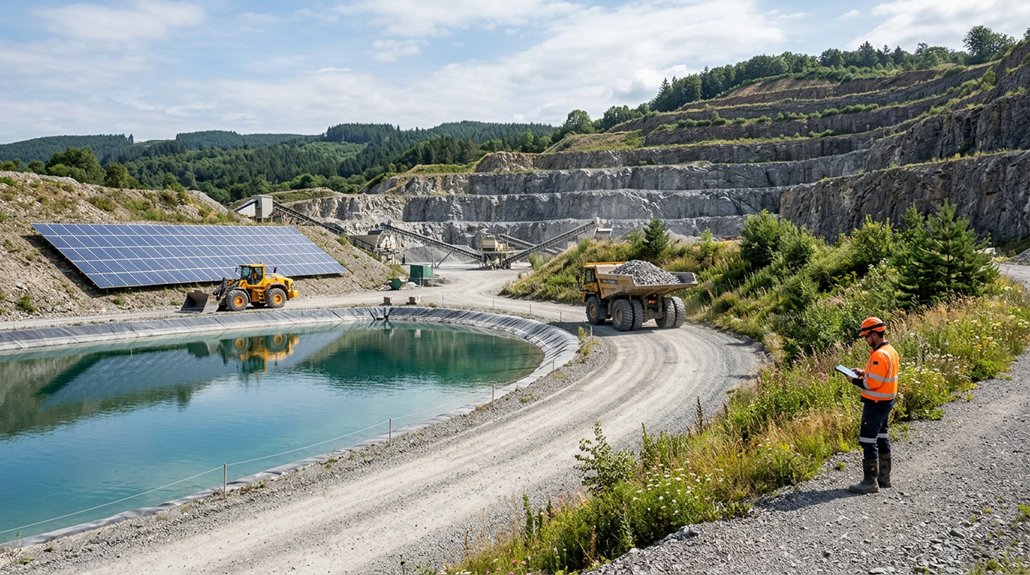
You may not realize that a quarry’s sustainability performance can influence whether its materials meet project requirements and earn community trust. Today, you’re expected to contemplate more than production: water use, emissions, site safety, and land restoration all matter. Practical controls and transparent monitoring can help you reduce impacts while strengthening compliance and operational efficiency. But the most effective approach depends on how regulations, customers, and local conditions shape each site.
What Sustainable Quarrying Looks Like
Sustainable quarrying balances reliable material production with responsible resource use, worker safety, and protection of surrounding ecosystems. You can apply this approach through disciplined planning, efficient extraction, and continuous monitoring.
Before operations begin, map deposits and sensitive habitats, then design extraction sequences that minimize land disturbance and preserve future restoration options. Use innovative techniques, such as precision drilling, real-time equipment monitoring, and water recycling, to reduce waste, emissions, and resource consumption.
You should also maintain rigorous safety systems, train crews, and inspect equipment to control operational risks.
Community engagement helps you identify local concerns early and coordinate practical responses, including traffic controls, noise limits, and transparent reporting.
Track performance against measurable targets for energy, water, dust, biodiversity, and rehabilitation. Regular audits let you correct gaps promptly and adapt controls as site conditions change, keeping quarry practices accountable and effective.
Why Sustainable Quarry Operations Matter
The benefits of sustainable quarry operations extend beyond environmental compliance: they protect worker health, conserve finite resources, and reduce exposure to operational and regulatory risks. By adopting Eco friendly practices and Resource conservation measures, you can strengthen site performance while limiting avoidable impacts.
- Protect workers: Control dust, noise, and equipment hazards through monitoring, maintenance, and clear procedures.
- Use materials efficiently: Optimize extraction plans, recover usable by-products, and reduce waste to extend reserves.
- Manage energy and water: Track consumption, maintain efficient equipment, and reuse process water where feasible.
- Improve resilience: Plan for rehabilitation and changing site conditions to reduce long-term liabilities and disruption.
These actions help you maintain reliable production, safeguard nearby ecosystems, and preserve the quarry’s value over its operating life.
Set measurable targets, assign accountability, and review results regularly so improvements are sustained and operational decisions remain evidence-based.
How Rules and Customers Shape Quarrying
You must meet environmental compliance standards for permits, emissions, water use, and site rehabilitation.
Customers increasingly favor responsibly sourced aggregates, so sustainability can influence your market access and contract terms.
Aligning operational controls with both requirements helps you reduce regulatory risk and remain competitive.
Environmental Compliance Standards
Environmental compliance standards shape how quarries manage emissions, water, noise, waste, and land restoration. You’ll need to translate permit conditions into operating controls, assign accountability, and retain verifiable records. Apply these four measures:
- Control dust and emissions: Maintain equipment, suppress haul-road dust, and monitor boundary air quality against permit limits.
- Protect water: Separate clean runoff from process water, inspect sediment controls, and test discharge points on schedule.
- Limit noise and waste: Use operating-hour restrictions, acoustic barriers, and documented procedures for handling, storing, and recycling materials.
- Restore land: Update rehabilitation plans, stabilize disturbed areas, and report progress to regulators.
You can use Green certifications to structure audits, while Eco friendly practices help meet site-specific obligations. Don’t treat certification as a substitute for compliance: verify current rules, train crews, investigate exceedances, and correct root causes promptly.
Keep evidence accessible for inspections and internal reviews.
Market Demand for Sustainability
As regulations tighten and buyers scrutinize supply chains, sustainability increasingly shapes which quarries win permits, contracts, and investment. You must demonstrate measurable performance, not just compliance, to meet procurement standards and protect market access. Track energy use, emissions, water consumption, dust, and rehabilitation progress with verified data.
Innovative Technologies, including electric equipment, real-time monitoring, and efficient processing systems, can reduce operating impacts while strengthening your evidence for customers. Buyers increasingly favor suppliers that disclose risks, set improvement targets, and provide traceable environmental records.
Community Engagement also influences project approvals and long-term acceptance: consult residents early, address concerns transparently, and report outcomes. By linking operational improvements to customer requirements and local priorities, you can lower regulatory exposure, differentiate your materials, and build durable contracts.
Treat sustainability as a commercial capability, supported by accountable management and continuous performance reviews.
How Quarries Cut Emissions and Save Water
Quarries can reduce emissions and water use by targeting the processes with the greatest impact: fuel-intensive equipment, material transport, dust control, and wash-water demand.
- Electrify equipment: Replace suitable diesel machines with electric alternatives, and maintain engines to cut fuel consumption and exhaust.
- Optimize haulage: Use route planning, payload monitoring, and conveyor systems to reduce truck trips and idling. Track fuel and emissions to verify gains.
- Control dust efficiently: Apply targeted sprays and covered conveyors rather than continuous broad-area watering. Select nozzles and pressure settings for site conditions.
- Reuse process water: Install settling ponds, filters, and closed-loop wash systems to recover water and limit freshwater withdrawals.
Innovative Technologies can strengthen monitoring and automation, while Community Engagement helps you communicate operational changes and address concerns.
Set measurable targets, review performance regularly, and adjust controls as production and weather conditions change.
How Quarry Restoration Helps Local Communities
When restoration is planned alongside extraction, a quarry can return land to useful, locally valued purposes. Your site plan should define end uses early, assess local needs, and set measurable milestones for each restoration phase.
Community engagement helps you identify priorities, such as public paths, recreation areas, or land suited to community use. Consult residents, local authorities, and Indigenous representatives before finalizing designs; their input can prevent conflicts and improve access and safety.
Ecological restoration should use suitable native species, stable landforms, and soil conditions that support long-term recovery. You’ll also need clear maintenance responsibilities, funding provisions, and monitoring criteria after closure.
The Environmental and Business Benefits of Sustainable Quarrying
Restoration is one outcome of sustainable quarrying; responsible operations can also reduce environmental impacts and strengthen business performance throughout a site’s life. You can achieve measurable gains by integrating environmental controls into daily planning and investment decisions:
- Conserve resources: You’ll reduce water demand through recycling systems and limit energy use with efficient equipment.
- Control emissions: You can lower dust, noise, and greenhouse gases through monitoring, maintenance, and optimized haul routes.
- Improve productivity: Innovative technologies, including automation and real-time sensors, help you prevent downtime, target extraction, and reduce waste.
- Build trust and resilience: Community engagement helps you address local concerns early, secure social acceptance, and maintain reliable operations.
Track performance against clear targets, audit results, and adjust controls as conditions change. These measures can reduce operating costs, strengthen compliance, and protect your license to operate.
Frequently Asked Questions
What Technologies Are Emerging to Make Quarry Operations More Sustainable?
You can make quarry operations more sustainable with electrified equipment, renewable energy, precision monitoring, and advanced material recovery. Battery-powered loaders and haul trucks cut fuel use and emissions.
While solar arrays and energy storage supply cleaner power. AI-enabled sensors optimize blasting, crushing, and water use.
Automated sorting recovers usable stone from by-products, supporting waste reduction. Digital twins help you test operating changes, track performance, and identify efficiency gains before implementing them across your site.
How Can Small Quarries Afford to Adopt Sustainable Practices?
You can make sustainability affordable by treating each improvement as a stepping-stone, not a mountain. Start with low-cost measures—repair leaks, optimize equipment schedules, control dust, and track fuel and water use—to reduce costs while lowering Environmental impact.
Apply savings toward upgrades, and seek grants, low-interest loans, or shared equipment through industry partnerships.
Strong community engagement can build trust, identify priorities, and support funding applications.
Measure results annually to guide your next investment.
What Certifications Recognize Responsible Quarry Operations?
You can demonstrate responsible quarry operations through ISO 14001 environmental management certification, ISO 45001 occupational health and safety certification, and, where available, quarry-specific programs such as the Sustainable Aggregates program.
These frameworks help you manage Environmental impact, worker safety, regulatory compliance, and community engagement.
Check each program’s regional availability and scope, then select an accredited, independent auditor.
Align certification requirements with your site risks, document performance, and review results regularly to maintain credible, measurable improvement.
How Can Quarry Operators Measure Progress Toward Sustainability Goals?
Measure progress by establishing a baseline, setting time-bound targets, and tracking key performance indicators quarterly.
Monitor energy and water use, emissions, waste, land rehabilitation, and biodiversity to quantify Environmental impact.
Assess worker safety and operational efficiency alongside these measures.
Use documented audits and verified data to identify gaps, assign corrective actions, and report results consistently.
Track Community engagement through participation, feedback, and resolved concerns.
Review targets annually, adjusting them as conditions and regulations change.
What Skills Do Workers Need for Sustainable Quarry Management?
You need environmental literacy, equipment expertise, data skills, and strong safety judgment to manage a quarry sustainably.
The International Energy Agency reports that renewables supplied about 30% of global electricity in 2023, showing why energy knowledge matters.
Provide Environmental training so you can monitor emissions, water, biodiversity, and compliance; build competence in renewable energy systems to assess solar or wind options.
You’ll also need communication and problem-solving skills to turn measurements into practical improvements.
Leave a Reply