

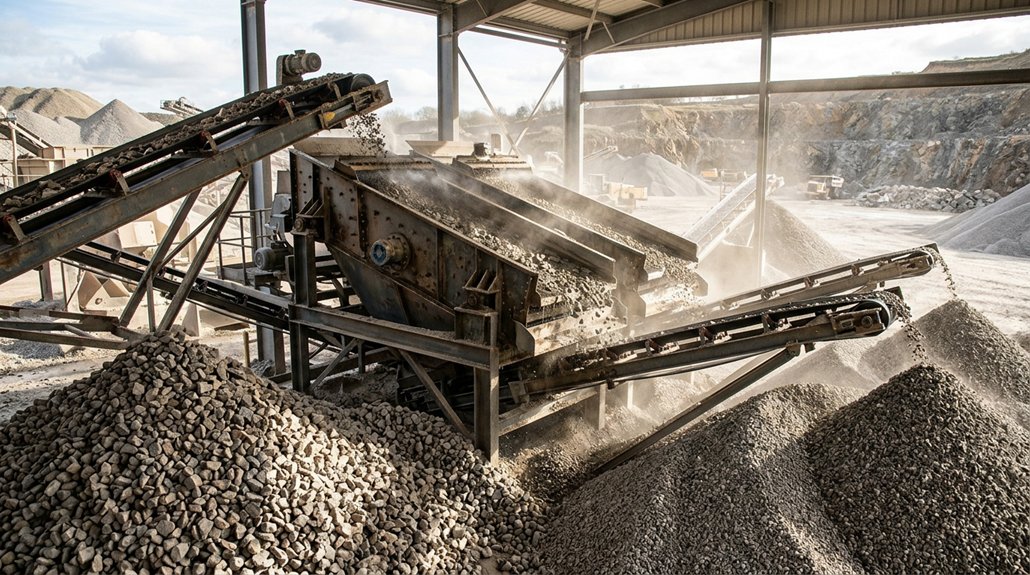
A screening plant acts as a precision filter, guiding each aggregate particle toward the right size class. When you control feed rate, vibration, and deck settings, you can remove fines and oversize material while reducing misclassification and waste. Regular monitoring and maintenance help keep gradation consistent, supporting stronger, more reliable construction materials. But even a well-tuned screen can lose accuracy when key operating factors shift.
How Screening Plants Size Aggregate
How do screening plants turn mixed material into consistent aggregate sizes? They separate feed according to particle dimensions, producing material suited to defined specifications. You control the process by selecting suitable screen media, setting operating parameters, and matching the machine to the feed’s characteristics.
Moisture, clay content, particle shape, and feed rate can affect how reliably material passes through openings, so monitor these conditions as production changes.
Screening efficiency influences both product consistency and the amount of usable material recovered. If the feed is overloaded or poorly distributed, separation can become less accurate, and unwanted sizes may remain in the product. Adjusting feed rate and maintaining clean, serviceable equipment helps sustain performance.
Your plant capacity must also align with upstream crushing and downstream handling, preventing bottlenecks while keeping output within required size ranges. Regular sampling confirms that finished aggregate meets specifications.
How Screen Decks Sort Aggregate by Size?
Screen decks sort aggregate by moving material across one or more surfaces with openings sized to separate specific fractions. As you select Screen deck design, match each opening pattern and deck angle to the feed and required product sizes. Vibration advances particles, while gravity and repeated contact help smaller pieces pass through apertures. Your choice of screening surface materials affects durability, open area, and particle movement.
- Feed enters the upper deck, where larger openings retain coarse particles and let smaller material pass.
- Material travels across the surface; vibration spreads the bed so particles can reach openings.
- A lower deck uses smaller apertures to classify the passing fraction into another size range.
- Each deck’s discharge forms a distinct graded stream, supporting consistent product specifications.
You can adjust feed rate and operating settings to maintain an even bed and reliable separation.
How Screening Plants Remove Fines and Oversize
You remove fines by directing undersized particles through the screen openings.
Oversize material stays on the deck for separate discharge or further processing.
These cuts help you maintain consistent aggregate gradation and product quality.
Separating Fine Particles
At the heart of aggregate sizing, screening plants separate material by directing it across vibrating decks fitted with mesh openings of selected sizes. Fine particle separation depends on consistent feed, effective vibration, and correctly sized apertures.
As you tune these variables, undersized grains pass through the mesh while usable material continues along the deck. This controlled classification supports Aggregate purity and helps you meet product specifications.
- Feed evenly: A steady material layer exposes particles to the screen surface.
- Set amplitude: Appropriate vibration moves fines toward openings without disrupting flow.
- Select mesh: Aperture size determines which particles pass through.
- Check moisture: Damp or sticky feed can bind fines and reduce screening efficiency.
You’ll get more reliable separation when you monitor each deck and adjust operating settings to match the feed’s size distribution and condition.
Removing Oversize Material
After fines pass through the deck, screening plants retain and discharge oversize particles that exceed the target gradation. You can direct this material to a crusher for further reduction or remove it from the process when it doesn’t meet product requirements. The selected route depends on particle size, material characteristics, and your plant’s operating plan.
Screen decks, apertures, and vibration settings determine how effectively oversized aggregate separates from the desired fraction. Inspecting these components helps you identify blinding, wear, or buildup that can allow large particles to pass through. Adjusting feed rate and maintaining an even material bed also supports reliable separation without overloading the screen.
These Aggregate sorting techniques contribute to Screening plant efficiency by limiting unwanted material in the finished stream and returning suitable oversize to the correct processing stage.
Improving Product Consistency
Consistent aggregate gradation depends on removing both undersize fines and oversize particles before they reach the finished product stream. With a correctly configured screening plant, you can separate material by size, stabilize each product fraction, and meet aggregate quality standards.
Effective screening plant efficiency relies on matching screen openings, deck arrangement, and feed rate to the target gradation.
- Feed evenly: You prevent surges that overload decks and allow particles to stratify.
- Remove fines: You direct undersized material through the correct mesh, limiting dust and excess fines in saleable products.
- Retain oversize: You capture particles above specification for crushing or recirculation.
- Check results: You sample each stream and adjust settings when gradation drifts.
These controls help you deliver predictable products, reduce rework, and maintain reliable performance across changing feed conditions.
Which Factors Affect Screening Accuracy?
Screening accuracy depends on how well the screen, feed, and operating conditions work together. Your screen’s aperture size and shape determine which particles can pass through, while worn or damaged panels can distort separation. Choose media suited to the material’s abrasiveness, moisture, and target cut size.
Material flow also matters. If you feed too much material, particles may crowd the deck, limiting contact with apertures and increasing misplaced sizes. Uneven distribution creates similar problems, so adjust feed points and flow rates to spread material across the full screen width.
Bed depth, vibration frequency, amplitude, and screen angle affect particle stratification and travel time; tune them to the material and equipment.
Account for environmental factors, too. Moisture can cause fine particles to stick or blind openings, while temperature and dust may affect handling. Regular inspection helps you identify changes that reduce screening precision.
How Accurate Screening Creates Consistent Aggregate
Accurate screening gives you tighter control over aggregate gradation by separating material into predictable size ranges. When you maintain consistent feed rates, screen condition, and settings, each product meets its target specification more reliably. This consistency supports dependable performance in concrete, asphalt, and base applications.
- Feed distribution: Even loading across the deck helps you use the full screening surface.
- Aperture selection: Correct openings define the cut size and limit variation between products.
- Vibration settings: Appropriate amplitude and frequency keep particles moving across the deck.
- Material flow dynamics: Balanced travel time gives particles sufficient opportunity to pass through the openings.
Monitor these factors together to improve screening plant efficiency and stabilize gradation. Regularly check samples from each discharge stream against specified size limits. By correcting deviations promptly, you’ll keep aggregate characteristics predictable from one production run to the next.
How Screening Plants Reduce Waste and Rework
When you screen aggregate, you remove oversized material before it disrupts downstream processing.
Consistent sizing helps you meet product specifications and limit off-spec material.
Remove Oversized Material
By separating particles above the target size, screening plants keep oversized material out of finished aggregate and downstream equipment. You can route retained rock for crushing, preventing blockages, excess wear, and avoidable downtime. This recovery step supports operational efficiency and limits waste, reducing the Environmental impact of processing material that would otherwise be discarded.
- Feed: A grizzly or screen deck intercepts rocks larger than the specified cut.
- Separate: Apertures let acceptable material pass while oversize remains on the deck.
- Collect: Chutes direct retained pieces to a dedicated conveyor or stockpile.
- Reprocess: You can return suitable oversize to a crusher, then screen it again.
Correct screen selection and steady feed help capture oversize reliably. Inspect decks for damage and clear buildup so material doesn’t bypass separation.
Improve Size Consistency
After oversize material is removed, screening plants help keep finished aggregate within a consistent size range. Properly selected screen decks separate particles by size, directing each fraction to the appropriate product stream.
You can adjust aperture dimensions and screen inclination to meet grading specifications while accounting for feed characteristics. Effective Screening efficiency depends on suitable media, even material distribution, and regular inspection for wear or blinding.
When these factors are controlled, you’ll produce more uniform aggregate and limit off-spec material entering product piles. Consistent Material throughput also matters: feeding the screen steadily helps maintain accurate separation without overloading the deck.
Monitor gradation tests and operating conditions to identify changes early. This gives you dependable quality across production runs and helps meet customer requirements for specified aggregate sizes.
Reduce Reprocessing Needs
Accurate screening reduces reprocessing by separating material into specification-compliant products on the first pass. When you match screen media, aperture, and operating speed to feed characteristics, you limit misplaced particles and unnecessary return trips through crushers. This improves plant throughput while protecting equipment from avoidable wear.
- Correct sizing: You direct each fraction to its intended stockpile, reducing off-spec blending.
- Lower recirculation: You send fewer oversize or undersize particles back for crushing or screening.
- Reduced waste: You recover usable material instead of rejecting it, supporting Environmental benefits through less disposal and energy use.
- Better cost control: You cut fuel, labor, and maintenance demands, creating positive economic impacts.
Monitor product gradations and adjust settings as feed conditions change. Consistent checks help you sustain first-pass performance and avoid costly rework.
How Maintenance Keeps Screening Quality Consistent
Consistent screening quality depends on keeping the equipment in good condition. You can preserve accurate separation by inspecting screen media, decks, and support structures for wear, damage, or loose fasteners. Replace worn panels promptly; uneven openings can let oversize material pass or send usable aggregate to waste.
Check bearings, lubrication, drive belts, and vibration mechanisms on a scheduled basis. Excessive vibration, poor lubrication, or misalignment can change material movement and reduce screening efficiency.
Equipment calibration also matters: verify screen angle, stroke, speed, and feed settings against the required product specifications, then adjust when conditions change.
Your operator training program should teach crews to recognize abnormal noise, blinding, and inconsistent gradation. Record inspections, repairs, and settings so you can identify recurring problems, plan preventive maintenance, and maintain reliable product quality across shifts.
Frequently Asked Questions
What Types of Screening Plants Are Used in Aggregate Production?
You’ll commonly find inclined, horizontal, and high-frequency vibrating screens in aggregate production, each suited to different feed rates, particle sizes, and moisture conditions.
Trommel screens rotate material through perforated drums, while grizzly screens remove oversized rock before crushing.
Portable screening plants support mobile operations; stationary units serve fixed sites.
Your choice affects Screening plant efficiency and Material size separation, so match screen design, deck configuration, and capacity to your material and required product specifications.
How Do Mobile Screening Plants Differ From Stationary Plants?
Mobile screening plants are the workhorses that bring the screening line to your material, while stationary plants stay anchored at a fixed site.
With Portable mobility, you can relocate equipment between projects, reducing hauling needs and supporting temporary operations.
Stationary systems typically offer higher capacity, extensive customization, and efficient integration into permanent facilities.
Mobile units provide operational flexibility and faster setup, but may have space or throughput limits.
Your choice depends on production targets, site conditions, and project duration.
What Safety Measures Should Operators Follow Around Screening Plants?
To work safely around screening plants, follow documented Safety protocols. Stay clear of moving belts and screens, and use designated walkways and access points.
Wear required Protective gear, including a hard hat, safety glasses, hearing protection, high-visibility clothing, and steel-toed boots.
Before maintenance or clearing blockages, shut down equipment, isolate energy sources, and apply lockout/tagout procedures.
Keep guards in place, maintain communication with operators, and never bypass interlocks or enter restricted areas while machinery is running.
Can Screening Plants Process Recycled Construction Materials?
Yes, screening plants can process recycled construction materials, acting as a sorting gate for concrete, asphalt, brick, and reclaimed aggregates. You’ll use screens to separate particles by size, improving material segregation and supporting consistent product specifications.
Feed condition, moisture, contamination, and screen configuration affect performance, so you should match equipment settings to the incoming material.
With suitable preparation and maintenance, you can boost recycling efficiency and recover usable material for new construction applications.
What Should Buyers Consider When Choosing a Screening Plant?
When choosing a screening plant, match its capacity, configuration, and mobility to your material and operating conditions.
Check that its decks and screen media support your required Material sizing, including the range of particle sizes and throughput.
Consider feed consistency, access for maintenance, energy use, and compatibility with existing equipment.
You’ll also want effective Dust control, reliable parts availability, and safety features suited to your site and regulatory requirements.
Leave a Reply