

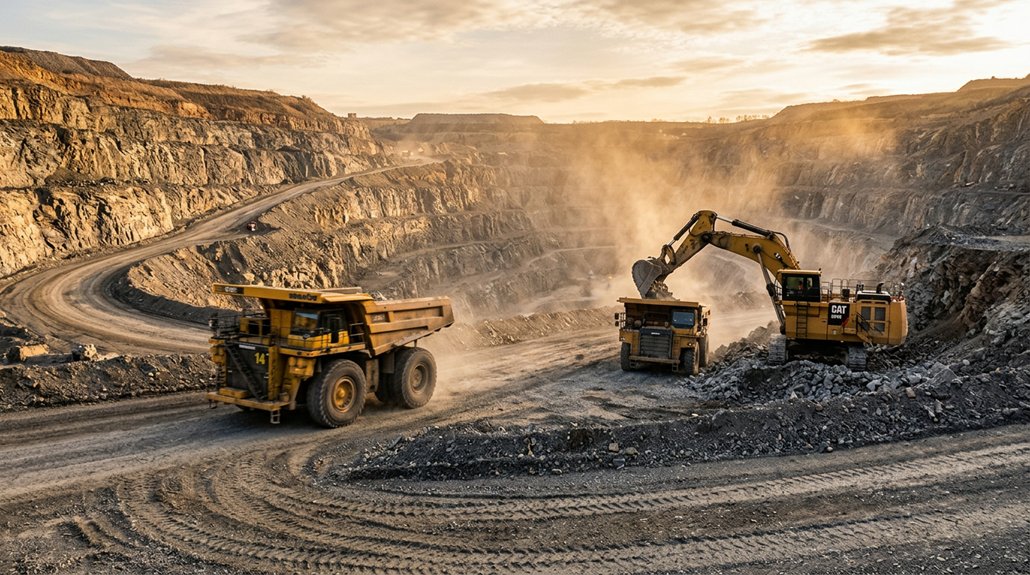
Quarry machinery drives productivity by keeping excavation, crushing, screening, and hauling in sync. When you match equipment to the material and manage each handoff carefully, you can improve throughput, limit idle time, and control operating costs. But even a well-equipped site can lose performance through poor maintenance, inefficient fuel use, or disconnected workflows. The right choices begin with understanding how each machine affects the next.
See How Quarry Equipment Keeps Work Moving
Quarry equipment keeps production moving by coordinating excavation, hauling, crushing, and screening into a continuous material-handling process. You can maintain steady output when machines are matched to site capacity and scheduled to limit idle time.
Excavators load haul trucks efficiently, while conveyors transfer material between work areas and reduce unnecessary vehicle movements. Screening systems separate material by size, supporting consistent downstream handling.
Use planned maintenance to identify wear, address faults, and prevent unplanned stoppages. Monitor equipment performance and adjust operating schedules as conditions change.
Effective coordination also reduces fuel use, dust, noise, and other Environmental impact concerns. Apply safety protocols around moving machinery, restricted zones, and maintenance tasks; clear communication helps crews work safely.
When you track throughput, downtime, and operating conditions, you can improve reliability and keep quarry operations productive throughout each shift.
Choose Quarry Crushers for Your Material
Once excavation and hauling keep feed material moving, selecting the right crusher helps maintain consistent output and limit bottlenecks. Match the machine to your rock’s hardness, abrasiveness, moisture, and required product size.
Jaw crushers handle primary reduction of large, hard feed; cone crushers suit secondary or tertiary crushing of abrasive stone; impact crushers work well with softer, less abrasive material when shape matters.
Consider throughput, feed dimensions, reduction ratio, and wear-part costs together—not in isolation. Effective rock fragmentation depends on choosing a crusher that can process your material without excessive energy use or premature wear.
Include access, foundation requirements, power supply, and service clearance in quarry site planning. Confirm the equipment can meet production targets under actual operating conditions, and consult suppliers for application data before committing to a configuration.
Use Quarry Screens to Control Material Flow
Choose screen sizes that match your target gradation and the material’s characteristics.
Proper screening separates product sizes and removes oversize efficiently.
Adjust feed and screen settings to control flow rate and prevent bottlenecks.
Screen Size Selection
To control material flow, select screen openings that match the required product sizes and feed characteristics. Your Screen size choice should reflect the feed’s grading, moisture, shape, and expected tonnage. Check the largest particles against the deck’s capacity, and allow enough open area for steady passage without overloading the screen.
Match aperture dimensions to your target output and downstream equipment limits; a mismatch can create bottlenecks, recirculation, or excess handling. Consider the screen media’s wear life and the machine’s operating range when comparing options.
If feed conditions vary, choose a configuration that accommodates normal fluctuations, then verify performance during commissioning. Monitor throughput and deck loading, and adjust feed rate or openings when operating data shows a constraint.
This practical approach supports equipment efficiency and consistent plant flow without compromising machinery reliability.
Material Separation
How effectively do quarry screens separate material? Your screen’s deck arrangement, aperture shape, and motion determine which particles pass through and which remain for further processing.
Match openings to the required product sizes, accounting for particle shape and the material’s tendency to blind or peg. Select suitable media—such as woven wire, polyurethane, or perforated plate—for your feed’s abrasiveness, moisture, and wear conditions.
Correctly tensioned panels and an even feed distribution help each particle encounter the screening surface, improving separation efficiency and supporting consistent mineral purity.
Inspect panels regularly for damage, buildup, and uneven wear; replace or clean them before defects contaminate finished fractions. Verify results by sampling each discharge and comparing particle-size distribution with specification.
Adjust deck configuration or media when testing reveals misplaced material, rather than accepting off-spec products.
Flow Rate Control
Beyond separating material to specification, quarry screens regulate how quickly it moves through a plant. You can control throughput by adjusting screen inclination, vibration amplitude, and feed distribution to match the material and downstream capacity.
Precision calibration helps you maintain a consistent bed depth, limiting surges that overload conveyors or starve crushers. If feed is uneven, correct the loading point and inspect screen media for blinding or wear before increasing vibration.
Use flow rate monitoring to compare incoming tonnage with the screen’s output and identify bottlenecks early. Track changes by product size and operating condition, then adjust settings in measured steps.
Don’t rely on maximum speed alone: excessive feed can reduce screening efficiency and raise recirculation. With routine checks and coordinated settings, you’ll sustain steady flow, protect equipment, and keep production aligned with plant targets.
Move Material With Loaders and Haul Trucks
When loaders and haul trucks are matched to quarry conditions, they move material efficiently while limiting fuel use, delays, and equipment wear. Choose loader bucket capacity and truck payload to suit rock size, haul distance, and loading conditions. A balanced match reduces queueing and prevents trucks from leaving underfilled or carrying excessive loads.
Plan haul routes with firm surfaces, manageable grades, adequate turning space, and clear separation from people and other machines. Use consistent loading positions and controlled bucket passes to minimize spillage and cycle time.
Track payloads, travel speed, and cycle times to identify bottlenecks and adjust dispatch. Equipment safety depends on visibility, seat belts, stable loading, and communication at loading and dumping points. Provide operator training for safe maneuvering, load control, and site-specific traffic procedures.
Don’t exceed rated capacities or approved speeds.
Prevent Quarry Equipment Downtime With Maintenance
Because quarry equipment works under heavy loads, abrasive dust, and constant vibration, preventive maintenance is essential to limit unplanned downtime. Inspect crushers, screens, conveyors, loaders, and haul trucks at scheduled intervals, following manufacturer service requirements. Check lubrication, filters, belts, bearings, hydraulic lines, and wear parts; replace components before failure threatens production. Keep inspection records so you can track recurring defects and verify repairs.
Predictive maintenance adds condition data to routine checks. Monitor vibration, temperature, oil quality, and pressure to identify developing faults early. Use these findings to plan service during suitable shutdowns, rather than reacting to breakdowns.
Train operators to report unusual noise, heat, leaks, or performance changes promptly. Clear maintenance procedures and readily available critical spares help you restore equipment faster.
Consistent care supports equipment longevity, protects workers, and keeps material moving reliably.
Use Automation to Coordinate Quarry Equipment
Preventive maintenance limits breakdowns; automation helps coordinate quarry equipment so production stays balanced. Connect crushers, conveyors, screens, and loaders through a central control system to monitor operating status and production rates.
You can use live data to adjust feed rates, prevent bottlenecks, and keep material moving through each stage. Set alerts for abnormal readings, then assign crews to investigate before a minor issue disrupts the line.
Predictive analytics can identify performance patterns and flag equipment likely to need attention, helping you schedule interventions around production demands.
Robotic automation can handle repetitive tasks, such as equipment inspection or material sampling, where site conditions and safety procedures allow.
Define clear operating limits and retain manual overrides so operators can respond to changing conditions. Review system data regularly to refine settings and improve coordination across your quarry.
Cut Fuel Use in Quarry Machinery
To cut fuel use, match each machine’s workload to its engine’s efficient operating range.
Avoid prolonged idling by shutting down equipment during extended pauses and coordinating tasks to keep machines productive.
You’ll reduce fuel consumption without compromising output.
Optimize Engine Load
Matching engine output to the work at hand cuts fuel use without sacrificing production. For better engine efficiency, match machine capacity and operating settings to material, haul distance, grade, and cycle demands.
Load optimization starts with selecting the right gear and throttle for each task, rather than running at maximum power by default. Keep engines within their recommended operating range, where torque and fuel consumption balance effectively.
On haul roads, use suitable speeds and avoid abrupt acceleration. On loading or crushing duties, coordinate equipment rates to prevent unnecessary power peaks.
Check telematics and fuel-burn data to identify machines that consistently operate underloaded or overloaded. Then adjust assignments, routes, or settings and verify results against output per litre.
Your operators should follow manufacturer guidance and report changes in material or terrain that affect engine demand.
Reduce Idle Time
When quarry machinery sits idle with the engine running, it burns fuel without moving material or supporting production. Track idle hours by machine and shift to identify avoidable delays, such as queuing, poor dispatch coordination, or extended breaks.
Set clear shutdown thresholds that account for restart time, engine temperature, and manufacturer guidance. Use telematics alerts to flag excessive idling and compare results across operators and sites.
You can reduce idle time by coordinating loading and haulage, staging equipment near work areas, and scheduling maintenance outside peak production periods. Include workforce training so operators know when to shut down safely and how to restart efficiently.
Review fuel and idle-time data regularly, then adjust procedures where performance falls short. These measures improve Operational efficiency while reducing fuel costs, emissions, and unnecessary engine wear.
Frequently Asked Questions
What Permits Are Required to Operate a Quarry?
You’ll generally need land-use approval, a quarry or mining permit, and environmental permits—but the exact list depends on your location and what you’ll extract.
Before operations begin, you may also need water-use, air-emissions, stormwater, blasting, and reclamation approvals.
Environmental regulations can impose monitoring and restoration requirements.
Don’t overlook Community engagement: public consultation may be required before approval.
Contact your local mining and environmental authorities early; one missing permit can delay opening or halt work.
How Do Quarries Manage Dust and Noise Impacts?
Quarries manage dust and noise through planned controls, monitoring, and maintenance. Dust suppression uses water sprays on crushers, conveyors, haul roads, and stockpiles. You can also use covered conveyors, speed limits, and road watering to reduce airborne particles.
Noise mitigation includes acoustic enclosures, barriers, equipment maintenance, restricted operating hours, and careful equipment placement. You should monitor boundary levels, investigate complaints, and adjust controls to meet permit conditions and protect nearby communities and workers.
What Safety Training Do Quarry Workers Need?
One overlooked hazard can turn an ordinary shift into an emergency, so you need training before entering a quarry. Learn site induction, hazard recognition, emergency response, first aid, and safe operation of machinery and vehicles.
Your program should cover Personal protective equipment, including correct selection, inspection, and use.
Practice Safety protocol adherence through lockout procedures, traffic controls, communication, and reporting near misses.
Refresher training keeps your skills current as equipment, tasks, and site conditions change.
How Can Quarries Assess the Quality of Extracted Stone?
You can assess extracted stone through representative sampling, laboratory testing, and consistent visual inspection. Check particle-size distribution, strength, density, absorption, durability, and contamination against the product specification and applicable standards.
Use Stone grading to classify material by size and intended use, then document results through a Quality assurance system with calibrated equipment, traceable samples, and acceptance limits.
Investigate failures promptly, adjust processing settings, and retest before releasing nonconforming batches to customers.
What Factors Affect Quarry Equipment Financing Options?
Like a load-bearing beam, your credit profile supports every financing decision. Your financing options depend on business credit, cash flow, down payment, equipment age, purchase price, and expected resale value.
Lenders also assess collateral, loan term, interest rates, and your operating history. Equipment leasing may require less upfront capital, while loans can build ownership equity.
Compare total costs, fees, maintenance obligations, and end-of-term conditions before choosing the arrangement that fits your production needs.
Leave a Reply