

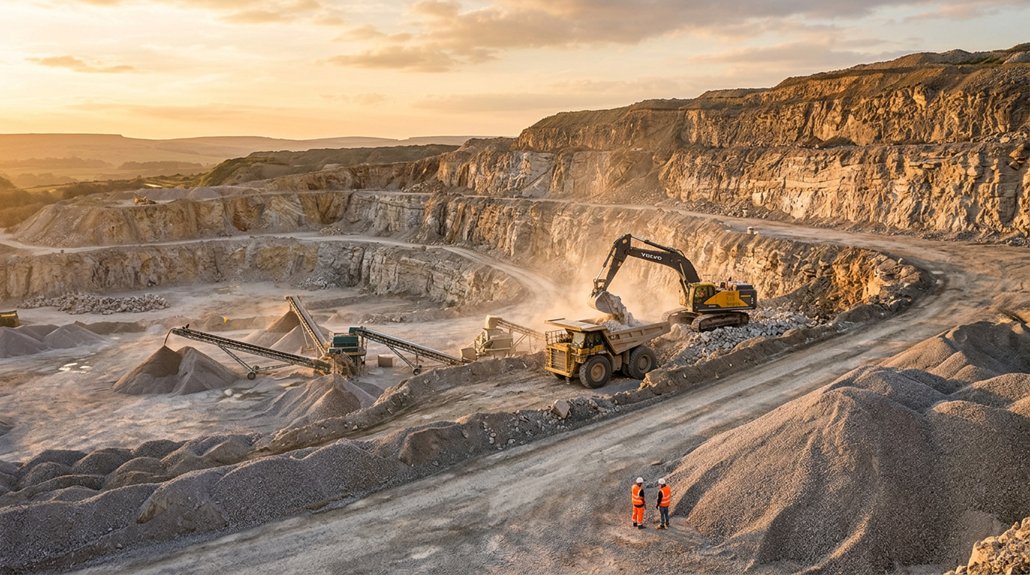
When you build a road, foundation, or concrete structure, you rely on materials that often begin in a quarry. Controlled extraction and processing turn rock into graded aggregates, sand, and other construction products, with quality checks helping guarantee they meet project specifications. Quarry operators must also manage worker safety, dust, water, and land disturbance. Understanding how these materials are produced—and how impacts are reduced—helps you assess the supply behind durable infrastructure.
What Construction Materials Come From Quarries?
Quarries supply the stone, sand, and gravel used in concrete, asphalt, road base, and building work. You’ll also find crushed limestone, granite, and basalt specified for foundations, drainage layers, and structural fill. Each material’s properties determine where it performs best: strength, particle size, durability, and water absorption all matter when you select aggregate for a project.
Some quarries produce dimension stone, cut into blocks or slabs for walls, paving, and architectural features. Others recover industrial minerals, such as limestone for cement or clay for bricks. Your local supply may include recycled or blended aggregates, depending on site resources and regulations.
When comparing suppliers, confirm grading, quality testing, and delivery capacity. Quarry equipment supports safe, consistent extraction, while Mining safety controls protect workers and nearby communities. Check product specifications before ordering to guarantee materials meet design requirements.
How Does Quarrying Turn Rock Into Building Materials?
Turning extracted rock into usable building materials starts with drilling and controlled blasting, or mechanical excavation where conditions call for it. During rock extraction, you’ll see crews follow a planned sequence that limits instability and produces manageable blocks.
Loaders and haul trucks move the broken rock to a processing plant, where material processing begins.
Primary crushers reduce large pieces to smaller sizes. Screens then separate particles by dimension, while secondary crushing refines material to meet specified gradations.
If needed, washing removes clay, dust, and other contaminants; conveyors keep the stages moving efficiently. Operators monitor feed rates, equipment condition, and product samples to maintain consistent quality.
You’ll find that each batch is checked against project specifications for size, cleanliness, and strength. Adjustments to crusher settings or screening can correct variation before the finished material is stockpiled and prepared for transport.
Where Are Quarry Materials Used in Construction?
From roads and foundations to concrete and drainage systems, quarry materials serve as essential inputs across construction. You’ll find crushed stone beneath highways and railways, where graded aggregate provides load-bearing support and improves stability.
In building foundations, compacted gravel forms a reliable base, while sand and stone are key components in concrete and mortar. Asphalt mixes also rely on aggregate for strength and surface performance.
You’ll use selected stone in retaining walls, landscaping, and erosion-control structures. Coarse aggregate supports drainage layers around buildings and utilities, helping water move away from vulnerable areas.
Material grading and quality must match design specifications; unsuitable sizes or contaminants can weaken structures or impair drainage. At the quarry, quarry equipment processes and loads products for delivery, while industrial safety procedures protect workers during handling and transport.
Check supplier certifications and project requirements before specifying materials.
How Does Quarrying Reduce Environmental Impacts?
Meeting material specifications is only part of responsible quarrying; operators also need to limit impacts on nearby land, water, air, and communities. You can reduce disturbance by planning extraction in phases, preserving topsoil, and restricting work to approved areas.
Effective reclamation practices restore exhausted sections with suitable soil, native vegetation, and stable landforms, helping control erosion and support habitat recovery.
For water protection, you can use settling ponds, drainage controls, and regular monitoring to keep sediment and contaminants out of streams.
Dust suppression, covered loads, and well-maintained equipment limit airborne particles and emissions.
Noise barriers, equipment scheduling, and safe haul routes reduce disruption for nearby residents.
Strong pollution control depends on inspections, documented procedures, and prompt corrective action. By tracking performance against permit conditions, you can identify problems early and improve operations throughout the quarry’s life and closure.
Frequently Asked Questions
What Permits Are Required to Operate a Quarry?
To operate a quarry, you’ll generally need land-use or zoning approval, a mining or extraction permit, environmental permits, and approvals for water use, wastewater, dust, noise, and air emissions.
Requirements vary by location and quarry size, so confirm them with your local and regional authorities before work begins.
Your Environmental impact assessment may be required, and community engagement can be part of review.
You’ll also need safety plans, reclamation bonding, and ongoing inspections.
How Are Quarry Workers Protected From Workplace Hazards?
Like a medieval shield wall, your quarry’s safety system protects workers through layered controls. Safety training teaches you to recognize hazards, operate machinery correctly, use personal protective equipment, and follow emergency procedures.
Hazard mitigation includes guarding equipment, controlling dust and noise, stabilizing slopes, managing vehicle routes, and inspecting work areas. You should report unsafe conditions promptly, maintain clear communication, and verify controls regularly.
Supervisors must investigate incidents and update procedures when conditions change.
What Careers Are Available in the Quarrying Industry?
You can pursue careers in quarry operations, including equipment operator, driller, blasting technician, plant worker, maintenance mechanic, surveyor, geologist, engineer, safety officer, and environmental specialist.
Mining technology also creates roles in automation, data analysis, and equipment systems.
If you prefer planning or oversight, consider logistics, quality control, management, or regulatory compliance.
Environmental impact work involves monitoring emissions, water, noise, and land restoration, helping you meet permits and reduce operational risks.
How Do Quarries Affect Nearby Property Values?
The theory that a nearby quarry always lowers your property’s value isn’t true; effects vary by location and operating conditions. You may see reduced buyer interest when noise pollution, dust, blasting, or heavy truck traffic disrupt daily life.
Environmental impact, visual changes, and perceived health risks can also influence prices. Conversely, strong local demand and distance from operations may limit any effect.
Check planning records, monitoring reports, and comparable sales before you buy or sell.
What Happens to a Quarry After Operations Cease?
After operations cease, a quarry is stabilized, monitored, and reclaimed according to its closure plan. You’ll typically see pit slopes secured, hazardous equipment removed, and drainage managed to prevent erosion or contamination.
Environmental restoration may include reshaping land, replacing soil, and establishing native vegetation.
Post closure reuse depends on site conditions and permits; you might find a lake, wildlife habitat, park, or development.
Ongoing inspections help guarantee the site remains safe and compliant.
Leave a Reply