

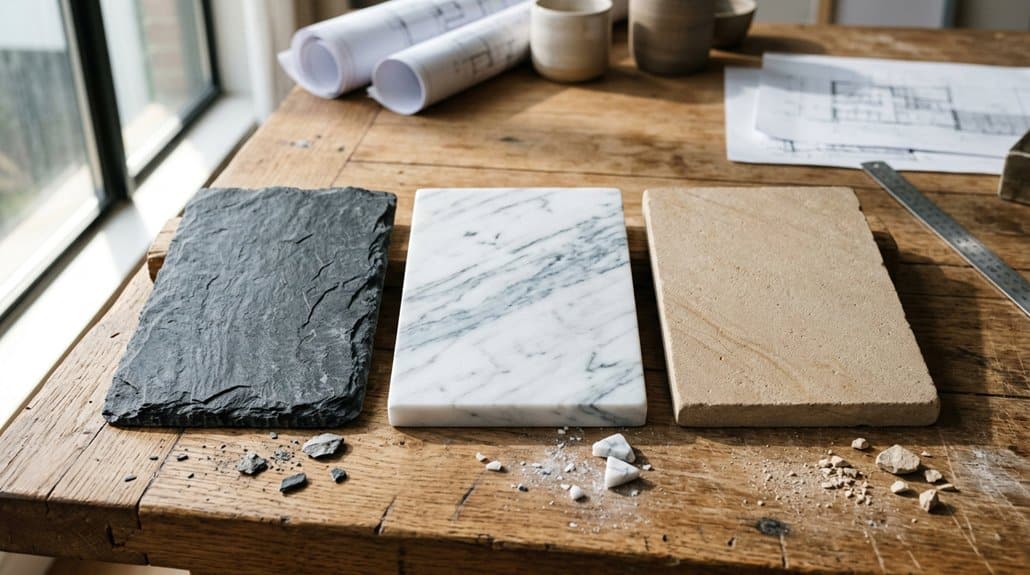
Choosing between slate, marble, and limestone means balancing appearance, durability, maintenance, and cost against your project’s conditions. Slate suits demanding spaces where grip and resilience matter; marble brings a refined finish but needs more care; limestone offers a softer look with limits in wet or high-traffic areas. Before you commit, consider how each stone will perform in your specific space—and which trade-off you can accept.
What Should You Consider When Choosing Stone?
Before choosing slate, marble, or limestone, consider where the stone will go and how you’ll use it. Match the material’s physical properties to the demands of your project. For floors, assess hardness, slip resistance, and expected foot traffic. For countertops, check porosity, stain resistance, and tolerance for heat or acids. In wet areas, confirm that the finish provides adequate traction and that the stone suits repeated moisture exposure.
Next, evaluate thickness, weight, installation requirements, and ongoing maintenance. Your substrate must support the stone, and your installer should account for cutting, sealing, and repair.
Consider Historical significance if you’re renovating a heritage property; local preservation rules may restrict material choices.
Weigh Environmental impact by checking quarry practices, transport distance, and product lifespan. Request technical data and samples before you specify stone.
Slate, Marble, or Limestone: Which Looks Best?
The best-looking stone depends on the character you want and how the surface will read in your space. Slate gives you a grounded, textured look, with stone color options ranging from charcoal and blue-gray to green and rust. Its cleft surface adds visible depth, while honed finishes appear more restrained.
Marble creates a refined, luminous effect. Veining varies by slab, so you can choose subtle movement or bold contrast; inspect full slabs to judge pattern and color accurately.
Limestone offers a softer, quieter appearance, typically in warm creams, beiges, and pale grays. Its fine texture and muted variation suit understated schemes.
For the strongest aesthetic versatility, match the stone’s color, veining, and finish to your palette and lighting. Order samples, then view them in place before choosing. Each stone’s natural variation makes your selection distinct.
How Do the Stones Hold Up in Different Spaces?
In kitchens, slate resists wear well, while marble and limestone need prompt spill cleanup and regular sealing.
In bathrooms, you’ll need to manage moisture and choose finishes that reduce slipping.
Outdoors, freeze-thaw cycles and weather exposure make stone density, finish, and installation critical.
Kitchen Durability
How well do slate, marble, and limestone handle kitchen wear? Slate’s dense, cleft surface resists scratches and hides minor marks, making it a practical choice for busy floors and counters.
Marble offers excellent strength, but its calcite reacts with acids; lemon juice, vinegar, and wine can etch the finish.
Limestone shares that sensitivity and is generally softer, so you’ll need prompt cleanup and careful use of cutting boards.
For any stone, sealing slows staining but won’t prevent etching or damage from impact. Choose a honed finish to make everyday wear less conspicuous, and follow the supplier’s cleaning and resealing guidance.
Ask about stone quarrying practices and eco-friendly sourcing, then compare samples under your kitchen’s lighting. Your best option depends on how much maintenance you’ll accept and how you use the space.
Bathroom Moisture
Bathrooms expose slate, marble, and limestone to frequent splashes, humidity, and cleaning products. Your choice should account for porosity, finish, and maintenance, not appearance alone.
Slate generally absorbs less water than limestone, though its cleft surface can hold residue; seal it and clean with a pH-neutral product.
Marble can etch when exposed to acidic cleaners, cosmetics, or hard water, so use a compatible sealer and wipe spills promptly.
Limestone is more porous and vulnerable to staining, making careful sealing and regular upkeep essential, especially around showers and sinks.
Historical applications and cultural significance explain each stone’s appeal, but don’t guarantee bathroom performance.
Check the product’s absorption rating, select a slip-resistant finish for wet floors, and follow the supplier’s care instructions.
Reapply sealer as directed, not on a fixed schedule.
Outdoor Performance
When exposed to weather, slate, marble, and limestone perform differently depending on climate, finish, and installation.
For patios and paths, choose slate for its low absorption and naturally slip-resistant stone texture, especially when you select a cleft or textured finish. Freeze-thaw cycles can still damage poorly installed slate, so provide drainage and a stable base.
Marble offers a refined look, but rain, frost, and grit can etch or wear its surface. Use it outdoors only in mild climates, with a suitable finish and regular sealing.
Limestone creates a softer, natural appearance; however, its porosity makes it vulnerable to staining, moisture, and freeze-thaw damage. Choose dense, exterior-rated grades and protect them with breathable sealer.
Across all three, expect color variation between pieces, and test samples in your site’s light before installation.
What Maintenance Does Each Stone Need?
For slate, you’ll need to remove grit regularly and use a pH-neutral cleaner to protect the surface.
Seal marble as recommended to reduce staining, and reseal when water no longer beads.
Clean limestone with a pH-neutral product, and avoid acids that can etch its surface.
Slate Care Requirements
Slate needs regular sweeping and prompt cleanup of spills to keep grit from scratching the surface and moisture from staining it. Your routine protects slate durability while preserving its natural texture and color.
- Sweep or vacuum with a soft-brush attachment; avoid beater bars that can chip edges or dislodge flakes.
- Wipe spills promptly with a soft cloth, especially acidic liquids, which may etch mineral-rich slate.
- Wash periodically with warm water and a pH-neutral cleaner labeled for natural stone. Rinse away residue and dry the floor to reduce water marks.
- Use mats at entrances and felt pads beneath furniture to limit grit and abrasion. Check grout and tiles for cracks, then repair damage promptly.
Choose cleaning products suited to your finish; harsh acids, bleach, and abrasive powders can dull the surface. Slate’s varied stone color options may show dust differently, so adjust sweeping frequency to traffic and visibility.
Marble Sealing Needs
Unlike slate, marble’s porous surface often needs periodic sealing to slow the absorption of spills and reduce staining.
For effective marble sealing, first confirm that your surface is clean and completely dry; trapped moisture can interfere with sealer performance.
Apply a penetrating sealer formulated for marble, following the manufacturer’s coverage and curing instructions.
Test it on an inconspicuous area to check for changes in color or sheen before treating the full surface.
Sealing won’t make marble stain-proof, so wipe spills promptly and use coasters or mats where exposure is likely.
Reapply when water no longer beads on the surface, or according to the product’s schedule.
Your marble’s finish, location, and use affect maintenance frequency.
Choose a breathable product labeled for natural stone to support porous stone protection without leaving a surface film.
Limestone Cleaning Tips
Because limestone is calcium-based and relatively soft, clean it with a pH-neutral stone cleaner and a soft cloth or mop. Avoid vinegar, citrus, bleach, and abrasive pads; acids can etch the surface, while grit can scratch it.
For dependable care, follow these steps:
- Remove grit: Sweep or vacuum with a soft-brush attachment before mopping to prevent scratches.
- Clean spills promptly: Blot liquids rather than rubbing, especially wine, coffee, or oils, which may stain porous limestone.
- Use minimal moisture: Damp-mop with diluted cleaner, then dry the floor with a clean cloth to limit water marks.
- Protect and restore: Arrange periodic stone sealing based on traffic and water absorption. Use professional Limestone polishing to address dullness or etching; don’t apply wax, which can trap dirt and alter the finish.
Test products in an inconspicuous spot first.
How Do Slate, Marble, and Limestone Compare in Cost?
Although prices vary by grade, finish, and region, slate generally costs less than marble, while limestone often falls between them. Your installed cost depends on more than the stone’s price per square foot. Include freight, substrate preparation, cutting, sealing, labor, and waste in your estimate.
Slate’s cleft surfaces can require careful fitting, while marble’s higher material cost and precise finishing may raise installation charges. Limestone pricing varies with density, porosity, and finish; softer grades may need more preparation or protection.
Ask suppliers for itemized quotes that specify thickness, finish, edge work, delivery, and installation. Compare samples and confirm that quoted quantities include a realistic allowance for cuts and breakage.
Your project’s Historical significance and Environmental impact may also affect sourcing requirements, transport distance, and total cost.
Which Stone Fits Your Project Best?
Choose slate for durable flooring and exterior surfaces, marble for distinctive veining and refined interiors, and limestone for a softer, natural look. Match your choice to traffic, exposure, maintenance capacity, and design goals. Historical applications and cultural significance can also guide selection, but performance should lead.
- Assess use: Slate’s layered structure resists wear and suits entryways, patios, and wet areas when properly finished.
- Evaluate appearance: Marble delivers varied veining and polish; use it where you can protect it from acids, staining, and abrasion.
- Check exposure: Limestone’s porous surface works well indoors and in sheltered settings; seal it and avoid harsh cleaners.
- Confirm specifications: Compare slip resistance, thickness, finish, and installation requirements with your project’s conditions.
Request samples and verify maintenance needs before ordering. Your best stone balances appearance, durability, and practical care.
Frequently Asked Questions
Can Slate, Marble, and Limestone Be Used Together in One Design?
Yes, you can combine slate, marble, and limestone; their varied textures create contrast. Match Color compatibility first, then assess Maintenance requirements: marble and limestone need more careful care. One practical rule: limit your palette to three dominant tones.
Are These Natural Stones Available in Different Finishes and Edge Profiles?
Yes, you’ll find these stones in varied finishes and edge profiles. Choose polished finishes for reflective surfaces, or honed finishes for less sheen. Beveled edges soften corners; confirm availability with your supplier before finalizing specifications.
How Can I Verify That Stone Comes From a Responsible Supplier?
Verify Sustainable sourcing by requesting quarry origin, chain-of-custody records, and independent audits. Check Ethical certification against recognized standards, confirm labor and environmental practices, and require documentation linking your specific stone shipment to its verified source.
What Should I Expect During Professional Stone Installation?
Expect your installer to verify measurements, prepare the substrate, dry-fit pieces, make precise cuts, and secure each slab. You’ll review seams and edges, then discuss Stone sealing, curing times, and practical Maintenance tips.
Can Damaged Slate, Marble, or Limestone Be Repaired?
Yes—damage isn’t always the final chapter. You can restore slate, marble, or limestone using suitable Repair techniques, including filling chips, honing scratches, and replacing pieces. Schedule Stone maintenance promptly; a stone specialist can assess damage and recommend repairs.
Leave a Reply