

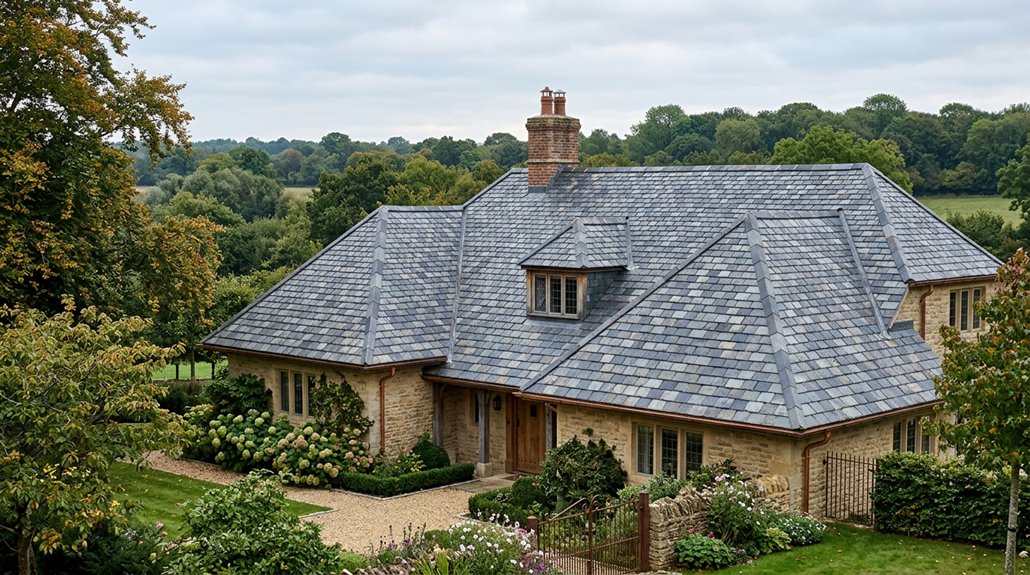
A well-installed slate roof can protect your home for generations, but its appeal goes beyond longevity. You get natural color variation, a textured finish, and a material that requires little upkeep when properly maintained. Slate also adds substantial weight and installation cost, so it isn’t suitable for every structure or budget. Before choosing it, consider how its lifespan, appearance, and structural demands fit your home.
Is Slate Roofing Right for Your Home?
Slate roofing suits homes with a structure strong enough to support its substantial weight and owners prepared for a higher upfront cost. Before choosing it, ask a structural engineer to assess your roof framing, especially if you’re replacing lighter materials. Slate’s weight may require reinforcement, adding to project costs.
Your roof’s pitch, shape, and detailing also matter: complex designs need skilled installers and careful planning to guarantee secure, weather-resistant coverage.
Consider whether local contractors have slate experience and can source suitable stone. Color, thickness, and finish affect appearance and installation requirements.
Slate’s historical appeal can complement traditional architecture, while clean profiles can suit some contemporary homes.
If you’re comparing eco-friendly options, slate’s natural composition and potential for reuse may appeal, but transport and quarrying still carry environmental impacts.
Weigh these factors against budget, structure, and design goals.
How Long Does a Slate Roof Last?
With proper installation and maintenance, a slate roof can last 75 to 200 years, depending on the stone’s quality and durability. This historical durability makes slate a long-term investment, but your roof’s lifespan depends on correct fixing, sound flashing, and a structure engineered to carry its weight.
Choose a qualified installer who understands slate selection and detailing. Inspect the roof periodically, especially after severe weather, and replace cracked or slipped tiles promptly. Keep gutters and drainage clear so water doesn’t back up beneath the covering.
Although slate costs more upfront than many alternatives, its service life can reduce replacement frequency and material waste. These environmental benefits matter when you assess lifetime value.
Ask your contractor to verify the stone’s grade, installation method, and maintenance requirements before you commit. A sound roof can protect your home for generations.
What Does Slate Roofing Look Like?
At a glance, slate roofing has a distinctive pattern of natural stone tiles, each with subtle variations in color, texture, and edge. You’ll see courses of individual pieces laid in overlapping rows, creating a defined, layered surface.
Slate’s color variations range from charcoal and blue-gray to green, purple, and warm brown, depending on the stone’s mineral content and source. Some roofs use one consistent shade; others combine tones for a varied, natural appearance.
Texture details also differ: a tile may look smooth and even, or show a rough, cleft face with visible ridges. Cut edges can appear straight and uniform or irregular, depending on how the slate was split and finished.
From the ground, these features give your roof depth and character; up close, they reveal each tile’s distinct natural markings.
What Do Slate Roofing and Installation Cost?
Those natural variations come at a premium: slate roofing typically costs more to install than asphalt shingles because the stone is heavy and requires skilled labor, reinforced roof framing in some homes, and careful handling. Your final price depends on slate type, roof size, pitch, access, and regional labor rates.
Natural slate generally costs more than synthetic alternatives, while complex rooflines, valleys, and flashing details increase labor. Before work begins, ask your contractor to inspect the deck and framing; repairs or structural reinforcement can add substantial expense.
Compare itemized estimates covering materials, tear-off, underlayment, flashing, disposal, and workmanship warranties. Material durability can offset the higher upfront investment: properly installed slate may last for generations, reducing replacement frequency.
However, installation complexity makes qualified slate experience essential; choosing a low bid without verifying expertise can lead to costly failures.
Frequently Asked Questions
How Much Maintenance Does a Slate Roof Require?
A stitch in time saves nine: You’ll need annual inspections and prompt repairs, not frequent upkeep. Slate durability helps limit maintenance, while Roofing aesthetics stay sharp when you replace slipped or cracked tiles and keep gutters clear.
Can Damaged Slate Tiles Be Repaired Individually?
Yes, you can replace damaged slate tiles individually. Match slate thickness, size, colour, and fixing methods for Material compatibility; consult a specialist for Historical restoration, where preserving original materials and traditional techniques matters.
Is Slate Roofing Suitable for All Climates?
No, slate roofing isn’t suitable for every climate. Its Historical durability resists rain, snow, and temperature changes, but you’ll need proper installation, structural support, and local expertise to guarantee Aesthetic versatility and reliable performance in your conditions.
What Underlayment Is Used Beneath Slate Tiles?
You’ll typically use 30-pound asphalt-saturated felt beneath slate tiles; synthetic membranes are another choice. For Slate installation, compare Underlayment options against local codes, roof pitch, and exposure—then follow manufacturer specifications for reliable water protection.
Can Solar Panels Be Installed on a Slate Roof?
Yes, you can install solar panels on a slate roof with specialized flashing and mounting hardware. For Solar compatibility, hire an experienced installer to protect tiles, maintain waterproofing, and preserve roofing aesthetics.
Leave a Reply