

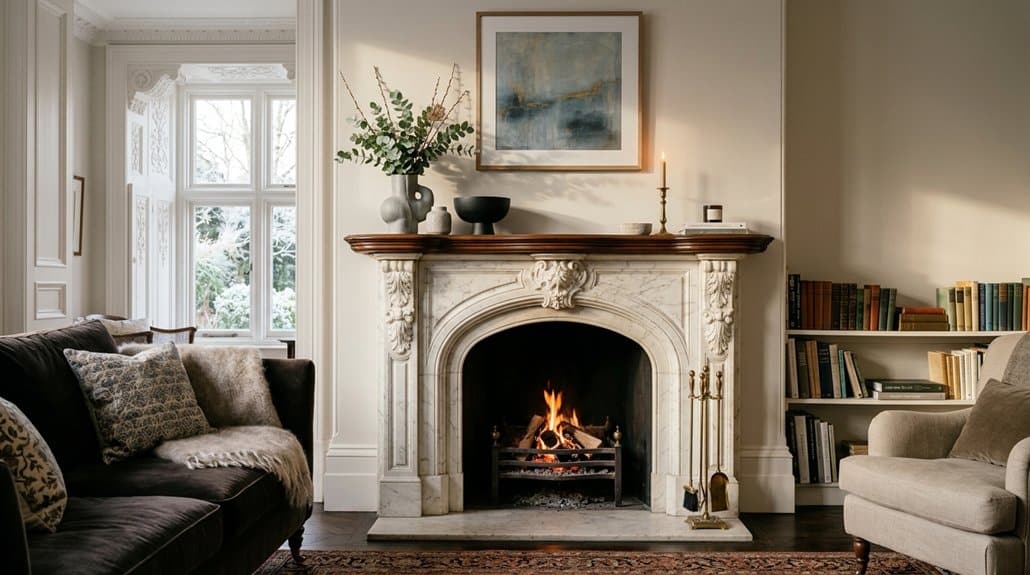
A Victorian marble fireplace can hide structural and safety issues behind its polished surface, so its appeal depends on more than appearance. In 2026, you’ll still find these surrounds valued for their carved detail, distinctive veining, and ability to anchor both period and modern rooms. Before you choose one, you’ll need to understand how to assess its condition, check installation requirements, and preserve its character without overlooking a costly risk.
Why Victorian Marble Fireplaces Still Appeal
Victorian marble fireplaces still appeal because their carved surrounds, distinctive veining, and balanced proportions add character while working with both period and contemporary interiors. Their Victorian elegance suits a restored home, yet a carefully chosen surround can also anchor a modern room without overwhelming it.
Marble craftsmanship gives each fireplace individual color and pattern, so you can select a piece that complements your flooring, walls, and furnishings. Before homeowners buy Victorian fireplaces it’s important to check dimensions, condition, and whether the surround fits your fire opening; older units may need professional adaptation.
Confirm that the hearth and firebox meet current local requirements, and have a qualified installer assess clearances and materials for your appliance. Marble can crack under unsuitable heat or impact, so follow the manufacturer’s guidance and avoid placing a fireplace into service until its installation has been inspected and approved.
How Carving and Marble Create Victorian Character
That lasting appeal comes from the way carving and marble work together: carved panels, fluted legs, and floral details give a surround its period character, while the stone’s veining adds natural variation.
You can assess marble intricacy by checking how patterns align across the mantel and whether edges remain crisp. Carving craftsmanship shows in balanced proportions, consistent depth, and clean progression between motifs.
These details aren’t merely decorative: deep cuts collect soot and dust, so you’ll need a soft brush and a pH-neutral stone cleaner. Avoid acidic products, abrasive pads, and excess water, which can etch or stain marble.
Before installation, have a qualified professional inspect the surround for cracks, loose sections, and secure fixings. Keep required clearances from the firebox, and don’t assume decorative stone is heat-rated or structurally sound.
How Victorian Marble Fireplaces Fit Modern Homes
A Victorian marble fireplace can anchor a modern room without dictating its style: pair its carved surround with simple furnishings, restrained colors, and contemporary lighting.
In interior design, treat the mantel as a focal point, then balance its visual weight with open space and streamlined furniture. Repeat a marble tone in flooring or accessories to connect the surround to your palette without making the room feel period-bound.
Its historical significance adds depth, while modern art and clean-lined materials keep the setting current.
If you use the fireplace, confirm that the flue, hearth, and clearances meet local requirements; decorative styling doesn’t replace fire-safety measures. Keep combustible objects away from the opening, and use a suitable screen when burning fuel. You can also leave the firebox inactive and style it as a purely architectural feature.
How to Assess, Buy, and Restore One
Before buying a Victorian marble fireplace, inspect the surround for cracks, loose sections, missing pieces, and signs of past repairs. Check that its dimensions suit your opening and room.
Ask the seller about provenance, previous repairs, and whether all components are original. Compare prices across the antique market, but budget for transport, installation, and professional conservation.
Don’t assume a fireplace is safe to use: have a qualified installer assess the chimney, hearth, clearances, and local code requirements before connecting any appliance.
For restoration, photograph and label each piece before dismantling. Use a conservator experienced in marble restoration techniques; harsh acids, abrasive pads, and unsuitable adhesives can etch or stain the stone.
Secure loose sections with compatible materials, and replace missing pieces only when necessary. Don’t lift heavy components alone; use proper supports and trained help.
Frequently Asked Questions
Are Victorian Marble Fireplaces Protected by Heritage Regulations?
Sometimes. You’ll need to check local heritage preservation listings and conservation regulations: protection depends on your fireplace designation, location, and building status. Before altering or removing it, contact your conservation officer and obtain required approvals.
Can I Install a Gas Fire in a Victorian Marble Fireplace?
Yes, you can install a gas fire, but first have a Gas Safe registered engineer assess the fireplace, chimney, and ventilation. Modern heating may require Safety upgrades; check heritage restrictions before altering original marble.
How Can I Tell Whether a Fireplace Surround Is Authentic?
You can assess fireplace authenticity by checking provenance, tool marks, wear, and period-appropriate construction; over 100 years old, Victorian surrounds may show natural patina. For marble verification, consult a stone conservator before cleaning, altering, or installing appliances.
What Insurance Considerations Apply to Antique Marble Fireplaces?
You should schedule an appraisal, confirm your homeowners policy covers antique marble fireplaces at replacement value, and document condition. Disclose restoration techniques and Material preservation work; verify contractor liability, transit coverage, and protection against accidental damage or theft.
Where Can I Find Replacement Parts for a Victorian Fireplace?
You can find replacement parts through specialist architectural salvage yards, fireplace restorers, and reputable online dealers. Match dimensions and materials; seek Victorian craftsmanship expertise and Marble sourcing advice. Have a qualified technician verify fit and safety before installation.
Leave a Reply