

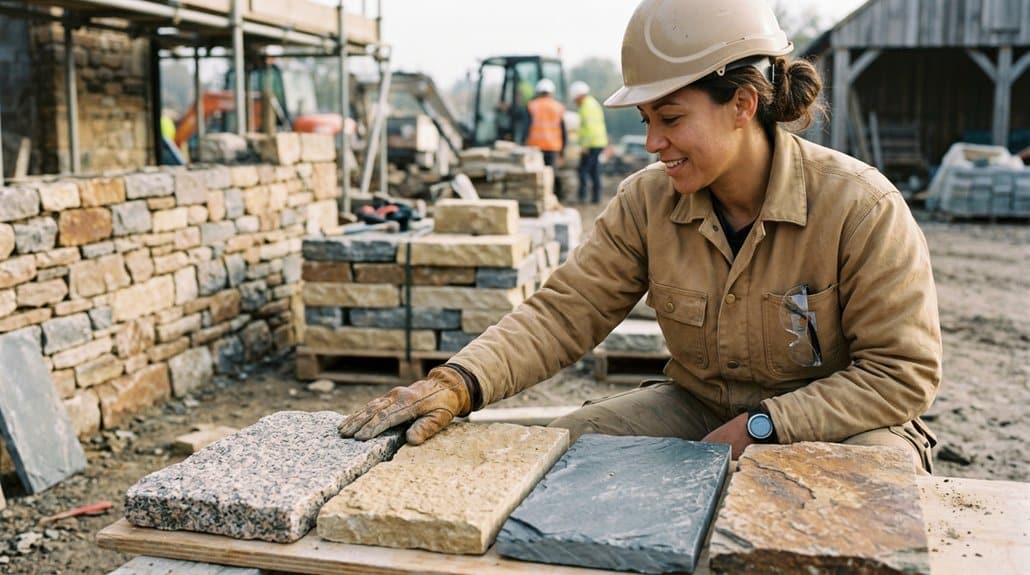
A stone’s appearance can hide major differences in porosity, wear resistance, and maintenance needs. When you choose natural stone for a construction project, match its properties to the site conditions and intended use—not just the color or pattern. Granite, limestone, marble, and slate each perform differently indoors and outdoors, and the right finish matters for safety. Before you set a budget or select a supplier, consider which factors could affect the stone’s service life.
Choose Natural Stone for Your Project
Choose natural stone based on how you’ll use it, the conditions it must withstand, and the appearance you want. Start by defining the application: paving, cladding, flooring, a retaining wall, or a structural element.
Then assess loads, exposure, drainage, maintenance access, and applicable building codes. For exterior work, account for freeze-thaw cycles, moisture, salt, and abrasion; for interiors, consider foot traffic, staining, and cleaning requirements.
Confirm that the stone’s dimensions, finish, and available supply suit your drawings and installation method. Request samples and technical data, and verify test results with your project team before specifying material.
You may also weigh Historical significance and Cultural symbolism when a project calls for regional identity or heritage continuity. Balance those values with performance, budget, sourcing, and long-term upkeep to make a defensible selection.
Compare Granite, Limestone, Marble, and Slate
Compare granite, limestone, marble, and slate by strength and durability to match each stone to your project’s demands. Assess their appearance and texture alongside exposure to weather, moisture, and wear.
Then weigh installation needs, best uses, and maintenance requirements to choose a stone you can manage over time.
Durability and Strength
When you assess natural stone for a construction project, distinguish compressive strength from resistance to wear, impact, and weathering.
Granite generally offers the highest strength and durability, making it suitable for heavy-use floors, steps, and exterior paving.
Slate resists water and performs well on roofs, though its layered structure can split under impact or poor installation.
Marble provides good compressive strength but scratches and weathers more readily, so reserve it for protected or carefully maintained applications.
Limestone varies by density; softer grades can erode or absorb moisture, while denser varieties suit walls and paving.
Match each stone to loads, exposure, maintenance capacity, and installation details.
Consider Environmental impact and historical significance, too: quarrying and transport affect project impacts, while established use can inform performance expectations.
Verify test data before specifying any stone.
Appearance and Texture
Appearance and texture shape how natural stone reads in a space and how it performs underfoot or in daily use. Granite typically shows crystalline grains and pronounced surface patterns, with color variations ranging from pale gray to deep black, red, or green.
Limestone presents a quieter, more uniform appearance, often with subtle fossils, fine grain, and muted beige, cream, or gray tones.
Marble’s veining creates distinctive movement; its color variations include white, gray, green, and darker hues.
Slate has a naturally layered structure and a cleft texture, with colors commonly spanning charcoal, rust, green, and purple.
Compare samples in the intended finish and lighting: polishing can intensify color and reflection, while honed, brushed, or split surfaces reveal different degrees of texture and visual depth.
Natural variation means each piece differs.
Best Uses and Maintenance
A stone’s appearance matters, but its suitability depends on how well it handles the demands of each application and the care it requires. Choose granite for countertops, exterior paving, and high-traffic floors; its density resists abrasion, though you should seal it periodically.
Limestone suits cladding and low-traffic interiors, but its surface porosity makes it vulnerable to staining and weathering, so seal it and clean spills promptly.
Marble brings natural veining to feature walls, vanities, and formal floors; avoid acidic cleaners, and expect to reseal it as needed.
Slate works well for roofing, wet-room floors, and outdoor paths because its layered structure provides grip. You’ll need to inspect slate for flaking and maintain grout.
For every stone, use pH-neutral cleaners and follow the supplier’s sealing guidance for your specific finish.
Match Natural Stone to Indoor and Outdoor Uses
Match each stone to the conditions it will face: indoors, prioritize appearance, maintenance, and resistance to stains or abrasion; outdoors, consider weather exposure, freeze-thaw cycles, slip resistance, and drainage.
For interior floors, select a finish suited to foot traffic and cleaning routines. Use marble or limestone for low-traffic rooms when you can manage periodic sealing and prompt spill cleanup. Choose granite for busy kitchens and entryways where abrasion resistance matters.
For Indoor accents, consider a distinctive veining pattern or color that complements nearby materials. Stone also works well for decorative features, including fireplace surrounds, vanity tops, and wall cladding; confirm that the stone and finish suit the installation and cleaning products.
Outside, match paving, steps, and façades to site conditions and intended use. Coordinate stone dimensions, finish, and layout with the project’s drainage plan, access needs, and architectural style before ordering.
Check Stone Durability, Weather, and Slip Resistance
Assess each stone’s hardness, porosity, and resistance to abrasion to confirm it’ll withstand the project’s traffic and maintenance demands.
For exterior applications, check how it handles freeze-thaw cycles, moisture, and temperature changes.
You should also verify that the surface finish provides adequate slip resistance when wet.
Assess Stone Durability
Before selecting a stone, evaluate how it will perform under the project’s conditions. Assess durability against the loads, use, and maintenance demands your installation will face. Stone erosion can weaken surfaces over time, so inspect samples for cracks, pores, and signs of wear. Review mineral composition: it affects hardness, strength, and resistance to abrasion.
Then compare test data and supplier documentation.
- Check strength: Confirm compressive strength suits the expected structural load; don’t rely on appearance alone.
- Assess abrasion: For floors and high-traffic areas, check abrasion ratings and inspect how readily the finish scratches.
- Review maintenance: Determine whether sealing or specialized cleaning is required, and factor those tasks into lifecycle costs.
Choose a grade supported by testing for your intended application. If data is missing, request independent results before purchase or installation.
Consider Weather and Slip Resistance
Choose stone for the climate and surface conditions it’ll face. Weather impact varies by material, finish, and exposure. If your project faces freeze-thaw cycles, select stone with low water absorption; trapped moisture can expand, causing cracks and spalling.
For coastal sites, consider salt exposure and choose stone that resists salt damage. In hot, sunny locations, check how the stone handles heat and ultraviolet exposure, and account for color changes.
For paths, stairs, and pool surrounds, evaluate slip safety when surfaces are wet or icy. A polished finish can become hazardous outdoors; choose a textured, flamed, or honed finish suited to the application.
Don’t rely on appearance alone. Request test data for water absorption, freeze-thaw resistance, and wet slip performance. Match those results to local conditions, maintenance plans, and applicable building codes before specifying the stone.
Compare Stone Finishes, Colors, and Styles
Stone finishes, colors, and patterns affect both a project’s appearance and its performance. Compare samples in the intended lighting, and assess how texture, veining, and color variation will read across the full installation. Your choice should suit the space’s function and design.
- Finish: Consider polished vs. honed surfaces. Polished stone reflects light and highlights color; honed stone offers a softer, less reflective appearance. For matte vs. glossy, evaluate glare, visibility of marks, and the visual effect you want.
- Color: Match undertones to nearby materials, including wood, metal, and paint. Check multiple slabs, since natural variation can shift the overall palette.
- Style: Align pattern scale with the project. Bold veining creates a focal point, while uniform stone supports a quieter, consistent look.
Review full-size samples before you finalize your selection to confirm the stone complements the design.
Budget for Stone, Installation, and Upkeep
A realistic stone budget includes more than the material price: account for fabrication, delivery, installation, sealing, and ongoing maintenance.
Compare cost considerations across stone types, including slab thickness, finish, waste, and cutting complexity. Dense or brittle stone may require specialized tools and careful handling, which can raise labor costs.
Confirm that your estimate includes substrate preparation, edge treatments, grout, and any reinforcement needed for the intended application.
Plan for long term maintenance as part of ownership costs. Some stones need periodic sealing; others require specific cleaners to prevent etching, staining, or surface damage.
Estimate the frequency and expense of these tasks based on the stone’s porosity, use, and exposure. Include repairs and replacement materials in your contingency allowance.
A lifecycle budget helps you weigh initial savings against durability and upkeep, so you can select stone that fits both your project requirements and available funds.
Find a Reliable Stone Supplier and Installer
Before placing an order, verify that the supplier can document the stone’s origin, grade, dimensions, and availability, and inspect the actual slabs or lots when possible. Check supplier reputation through project references, trade credentials, and records of consistent deliveries. Confirm that quoted material matches your specifications, including finish, thickness, tolerances, and batch variation.
Assess the installer’s experience with your stone type and project conditions. Ask how the crew will handle substrate preparation, waterproofing, joint spacing, anchoring, and movement joints. Review installation techniques and require a written scope that identifies materials, sequencing, protection, and acceptance criteria.
- Request samples and compare them under project lighting.
- Verify insurance, warranties, and responsibility for defects.
- Confirm delivery timing, storage requirements, and replacement procedures.
A qualified team reduces breakage, delays, and costly rework. Get commitments in writing before approving fabrication or installation.
Frequently Asked Questions
Can Natural Stone Be Recycled or Reused After a Building Is Demolished?
Yes—intact stone can serve new projects, while damaged pieces become aggregate. Recycling options include crushing and repurposing; reuse potential rises when you carefully dismantle, sort, and inspect stone for strength, dimensions, and contamination.
How Can Natural Stone Be Sourced Responsibly and Ethically?
You can guarantee Ethical sourcing by choosing suppliers who document quarry locations, labor standards, and environmental permits. Verify Sustainable quarrying practices, including habitat restoration, water management, worker protections, and traceable transport records before purchasing stone.
Does Natural Stone Affect Indoor Air Quality?
Natural stone rarely affects indoor air; it’s cleaner than a mountain breeze. You’ll find most stone emits few Volatile compounds, but sealers and adhesives can release them. Choose low-emission products, ventilate during installation, and verify certifications.
Can Natural Stone Be Customized With Carved Patterns or Logos?
Yes, you can customize natural stone with carved patterns or logos. Carving techniques include CNC routing and hand engraving; logo customization works best when you provide vector artwork and confirm stone hardness, finish, and minimum detail requirements.
How Does Natural Stone Compare With Manufactured Materials in Terms of Environmental Impact?
Natural stone often has a lower Environmental footprint: quarrying emits less CO₂ than manufacturing cement-based products. You’ll gain Sustainability benefits through durability and reuse, though transport distance and extraction practices can increase impacts considerably.
Leave a Reply