

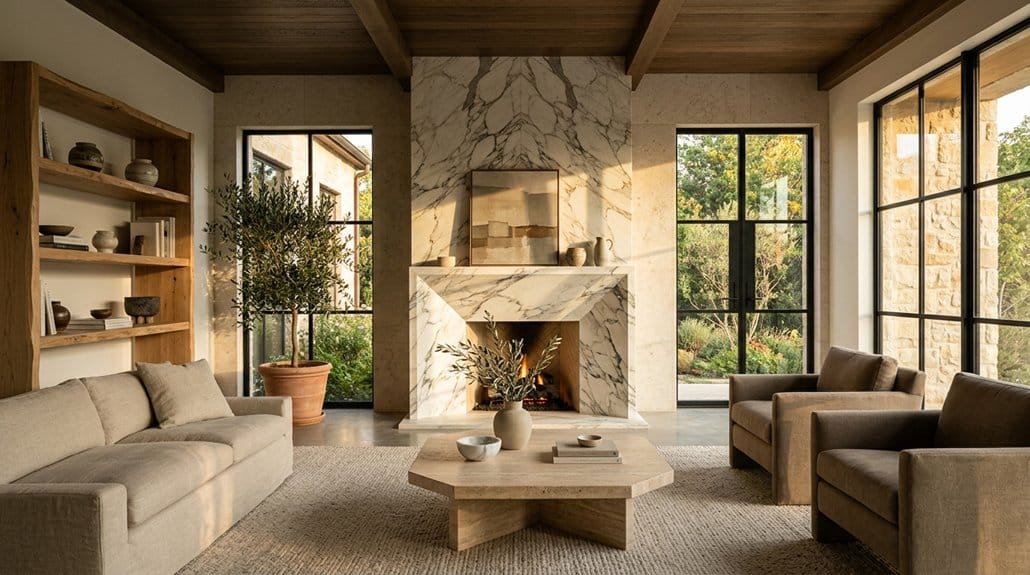
Like the enduring stonework of ancient architecture, natural stone brings lasting character to contemporary homes. You can use granite, marble, or slate to add distinctive surfaces while supporting durability and, in some settings, passive temperature regulation. Locally sourced stone can also reduce transport impacts and support more responsible material choices. But performance depends on selecting the right stone, location, finish, and care routine—details that shape how well it serves your home.
Why Natural Stone Works in Modern Homes
Natural stone works in modern homes because it combines durable performance with material variation that complements clean, restrained design. You can use it on floors, counters, walls, and entryways to create surfaces that withstand daily wear while anchoring a room visually. Its thermal mass can also support passive temperature regulation when your design accounts for climate, orientation, and insulation.
Specify finishes and installation systems for each application, then confirm substrate capacity, sealing needs, and maintenance requirements with your contractor. These steps help you manage lifecycle costs and protect performance.
As Eco friendly materials gain priority, locally sourced stone can reduce transport impacts, while long service life limits replacement frequency.
Historical influences also inform contemporary layouts: you can reference traditional stonework through proportion and placement without sacrificing streamlined detailing.
How Natural Stone Types Differ
Choosing the right stone starts with understanding how its composition affects performance and appearance. Geological formation determines mineral content, grain structure, porosity, and hardness, so each material responds differently to fabrication and maintenance.
Granite’s interlocking crystals generally provide high hardness and low absorption, while marble’s calcite-rich structure is softer and more vulnerable to acids and abrasion.
Limestone and travertine often have greater porosity, making sealing and moisture control important.
Slate forms in layers, giving you distinctive texture but requiring attention to cleavage and thickness.
Quartzite’s dense, recrystallized structure typically offers strong resistance to wear, though surface characteristics vary by quarry.
Historical significance can guide your selection, but verify current technical data, finish, and batch consistency.
Request samples and test absorption, stain response, and slip performance before specifying a stone.
Where to Use Natural Stone at Home
When planning stone surfaces, match each material to the room’s moisture, wear, and maintenance demands. In kitchens, use dense, low-porosity stone for countertops, and seal it as the supplier specifies to limit staining.
For bathrooms, choose slip-resistant finishes on floors and confirm that the stone tolerates frequent cleaning and water exposure.
Entryways benefit from durable flooring that handles grit; place mats at entrances to reduce abrasion.
Fireplace surrounds need stone rated for the installation’s heat conditions, with clearances set to local code and manufacturer guidance.
Outdoors, select frost-resistant paving with a textured finish for outdoor pathways, and provide proper drainage to prevent pooling and freeze damage.
You’ll get better service life when installers prepare stable substrates, use compatible setting materials, and follow recommended joint widths.
Schedule inspections and resealing when required.
How to Pair Natural Stone With Wood and Metal
Pair stone with wood and metal by coordinating undertones, textures, and finish levels. Start with the stone’s dominant hue, then select wood species that reinforce its warmth or coolness. For example, pair beige limestone with oak or walnut, and balance blue-gray marble with ash or white oak. This color coordination keeps adjacent surfaces cohesive without making them identical.
Use Textural contrast to define each material’s role. A honed stone surface can sit beside open-grain wood and brushed metal, while polished stone pairs well with matte cabinetry and satin hardware. Limit competing patterns: if your stone has strong veining, choose restrained wood grain and simple metal profiles.
Repeat one metal finish across fixtures and trim to create continuity. You’ll achieve a deliberate material palette by varying texture while controlling color, sheen, and visual complexity.
How to Clean and Protect Natural Stone
To keep natural stone in good condition, clean it with a pH-neutral stone cleaner and a soft cloth or mop. Acidic products such as vinegar can etch marble and limestone, while abrasive pads may dull polished finishes. Wipe spills promptly, especially oil, wine, and citrus, to limit absorption and etching.
For stain removal, blot rather than rub, then use a stone-safe poultice suited to the stain and stone type. Test products in an inconspicuous area first.
Sealing techniques depend on porosity, finish, and use. Apply an impregnating sealer according to the manufacturer’s instructions, and allow the surface to cure before use. Sealers reduce absorption but don’t make stone stain-proof; reseal when water no longer beads, following supplier guidance.
Use coasters, cutting boards, and mats to reduce wear, and avoid standing water around joints.
Frequently Asked Questions
Does Natural Stone Increase a Home’s Resale Value?
Yes, natural stone can increase your home’s resale value when buyers recognize its Luxury appeal. You’ll maximize returns by choosing durable materials, matching local preferences, and addressing Maintenance considerations, including sealing and repair costs, upfront.
Is Natural Stone an Environmentally Sustainable Building Material?
Natural stone can be sustainable, but it’s no green silver bullet. You should verify Eco friendly sourcing, compare transport distances through Carbon footprint analysis, and assess durability, quarry practices, and local alternatives before specifying it.
Can Natural Stone Be Installed Over Existing Flooring?
Yes, you can install natural stone over existing flooring if the substrate is sound, level, and securely bonded. Assess Stone durability, floor height, and installation challenges; consult an installer before proceeding with your project.
How Long Does Natural Stone Installation Typically Take?
Your stone’s path from quarry to floor typically takes three to seven days for an average room; complexity, substrate preparation, and curing extend the Installation timeline. Plan Stone maintenance after sealing and grout cure.
Does Natural Stone Require Professional Installation?
You don’t always need professional installation, but natural stone’s weight, substrate requirements, and precise cutting make expert work advisable. Consider DIY installation only for small projects; compare cost considerations against potential breakage, rework, and warranty risks.
Leave a Reply