

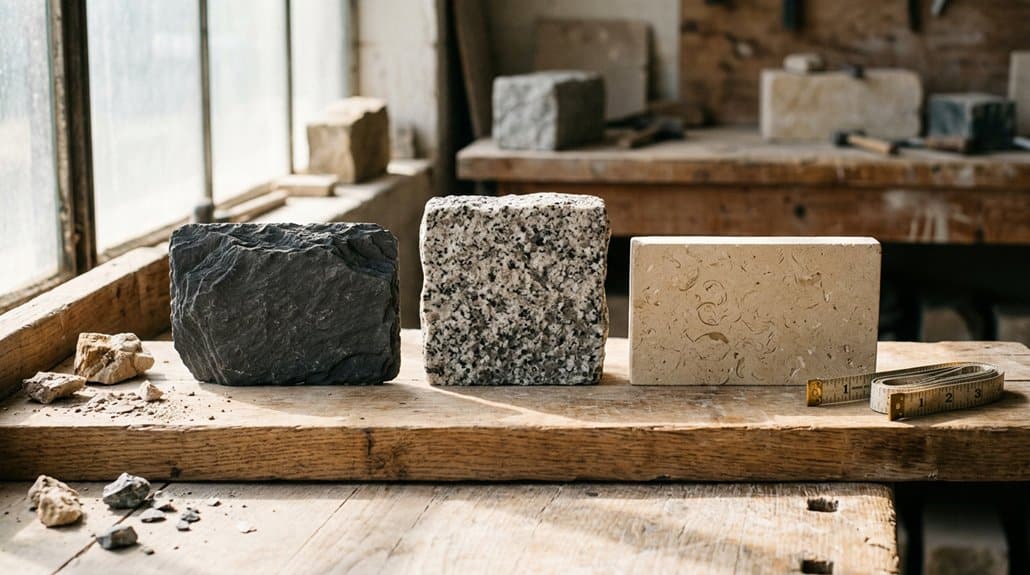
If you’re choosing flooring for a busy kitchen, granite can handle daily wear better than softer limestone. Slate offers a textured, slip-resistant surface for wet areas, while limestone brings warmer tones to quieter rooms but needs protection from acids and abrasion. Your choice also affects sealing, cleaning, and long-term costs. Before you decide, consider how each stone will perform in your space and what its upkeep will require.
How Do Slate, Granite, and Limestone Compare?
Slate, granite, and limestone differ in hardness, porosity, and maintenance needs. Your choice depends on where you’ll install the stone and how you’ll use it.
Slate forms when shale undergoes heat and pressure, producing fine layers that split into sheets. Its textured surface suits floors and roofs, though cleft edges can vary in thickness.
Granite crystallizes slowly underground from magma, creating a dense, hard stone with visible mineral grains. It withstands abrasion and works well on counters and high-traffic floors.
Limestone forms from accumulated marine sediments, so fossils and subtle color variation may appear. It’s softer and more porous, making it better for low-impact areas.
Each material also carries historical significance in regional architecture. Understanding geological formation helps you assess appearance, strength, and suitability before selecting a stone for your project.
What Do These Stones Cost to Maintain?
Beyond hardness and porosity, compare the ongoing costs of sealing, cleaning, and repairing each stone. Your total depends on surface finish, product choice, and maintenance frequency. Sealing requirements vary: granite often needs less frequent treatment, while slate and limestone may require periodic applications. Check manufacturer guidance before budgeting.
- Granite: Higher stain resistance can reduce cleanup and spot-treatment costs; reseal when water no longer beads.
- Slate: Clean with pH-neutral products; uneven surfaces may take longer to maintain.
- Limestone: Use gentle cleaners and prompt spill removal; acidic products can etch it.
- Sealer: Include compatible materials and labor in your recurring budget.
- Repairs: Plan for chipped edges, damaged grout, or professional refinishing.
You’ll usually control costs by wiping spills promptly, avoiding abrasive or acidic cleaners, and following a consistent care schedule.
Compare annual upkeep, not just initial sealing expense.
Which Stone Fits Your Room or Outdoor Space?
Where you install stone determines which properties matter most. In a kitchen or entryway, you need a surface that tolerates frequent traffic, spills, and cleaning. Granite’s density suits these demands, while slate’s naturally textured finish can improve grip in wet areas.
For bathrooms, check that the stone’s finish and sealing requirements match your exposure to water and cleaning products.
In living rooms, consider how texture, color variations, and decorative patterns interact with lighting, furniture, and room scale. Limestone’s softer, quieter appearance can complement relaxed interiors, but it’s more vulnerable to acids and abrasion.
Outdoors, prioritize freeze-thaw resistance, slip performance, and drainage; suitability depends on your local climate and the specific stone. You’ll also need to account for installation conditions, since substrate strength and surface preparation affect performance indoors and outside.
How Should You Choose Between Slate, Granite, and Limestone?
To choose among slate, granite, and limestone, compare their durability, surface texture, maintenance needs, and appearance against your priorities. Then match each stone to the conditions it’ll face.
- Slate: Choose it for slip-resistant texture and layered color; seal it periodically to limit staining.
- Granite: Select it for high hardness, heat resistance, and busy surfaces; sealing helps prevent absorption.
- Limestone: Pick it for soft, warm tones, but avoid acidic cleaners and high-wear areas.
- Use: Check freeze-thaw exposure, moisture, foot traffic, and installation requirements before buying.
- Meaning: Consider Historical significance and Cultural symbolism if the stone’s origin or traditional use matters to your design.
Request samples and compare them under your room’s lighting. Confirm thickness, finish, and care instructions with your supplier. Your best choice balances performance, upkeep, budget, and the look you want.
Frequently Asked Questions
How Are Slate, Granite, and Limestone Quarried?
You quarry slate, granite, and limestone by removing overburden, cutting the exposed rock, and transporting blocks for processing. Stone formation determines the method: slate’s layered structure allows splitting along cleavage.
Granite’s hardness requires diamond-wire sawing, drilling, or controlled blasting. Limestone is typically cut with wire saws or channeling machines. Quarrying techniques aim to limit fractures and waste.
You’ll find that site geology, safety requirements, and intended product shape guide equipment choices and extraction plans.
Can Stone Tiles Be Installed Over Existing Flooring?
Yes, you can install stone tiles over existing flooring, but only if the substrate is sound, stable, level, and compatible.
A 1/8-inch height variation across 10 feet is a common tile-installation tolerance; verify your tile and mortar manufacturers’ requirements.
Surface preparation means removing wax, grease, loose material, and contaminants, then checking for movement or moisture.
Adhesive selection matters: use a mortar approved for both the stone and existing surface.
Consider added floor height.
What Tools Are Needed to Cut Natural Stone?
To cut natural stone, you’ll need a wet tile saw with a diamond blade for straight cuts.
You’ll also need an angle grinder with a diamond blade for curves and notches.
Use a straightedge, tape measure, marker, clamps, and stone-safe polishing pads.
Wear safety glasses, hearing protection, gloves, and a respirator.
Control silica dust with water.
After cutting, smooth edges for decorative finishing, then apply stone sealing as appropriate.
How Can You Identify Genuine Natural Stone?
You can identify genuine natural stone by checking for irregular mineral patterns, subtle color variation, and unique veins—nature apparently didn’t hire a factory’s quality-control team.
Examine edges and the underside: genuine stone usually shows consistent material throughout, while printed imitations may reveal a different core.
Compare samples, feel the texture, and ask for documentation.
Stone finishing can alter sheen, and surface coloration may vary, so don’t rely on appearance alone; request a professional identification when uncertain.
Can Damaged Stone Tiles Be Repaired or Replaced?
Yes, you can repair or replace damaged stone tiles, depending on the damage and available matching materials. Restoration techniques include cleaning, filling chips or cracks with suitable resin, and honing or polishing the surface. A stone specialist can assess structural damage.
Replacement options include installing a salvaged tile or sourcing a close match. Remove the damaged tile carefully to protect surrounding pieces, then use compatible adhesive, grout, and sealant for installation and finishing.
Leave a Reply